SpaceX Files Confidentially for $1.75T IPO That Would Shatter All Records
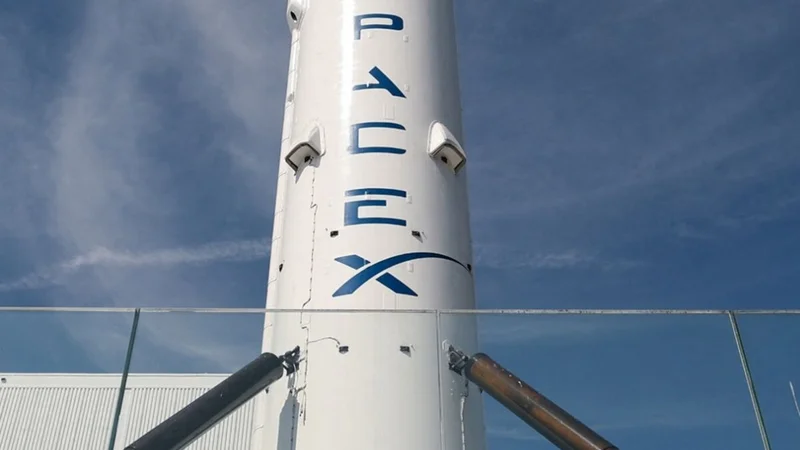
Image: Bloomberg AI
Main Takeaway
SpaceX has quietly filed for a $75B raise at a $1.75T valuation—tripling Saudi Aramco’s record and making Elon Musk history’s first trillionaire.
Jump to Key PointsSummary
The filing that just reset the IPO bar
SpaceX has submitted confidential paperwork for an initial public offering that would raise roughly $75 billion and value Elon Musk’s aerospace company at about $1.75 trillion, according to multiple people with direct knowledge of the process. If priced at that level, the deal would triple Saudi Aramco’s 2019 record and instantly make SpaceX the second-most valuable publicly traded firm on Earth, behind only Apple. Bloomberg reports the confidential S-1 landed at the SEC “within the past few days,” while the Economic Times and Seeking Alpha cite late-March board sign-offs. No formal announcement has been made; SpaceX declined comment.
Why Musk chose this moment
Timing is everything. Satellite Today notes that Musk spent December and January warming investors to a 2026 debut after years of insisting SpaceX would stay private “until Mars flights are routine.” The catalyst appears to be February’s all-stock merger of SpaceX with xAI, Musk’s generative-AI startup. That deal, first reported by SatNews, bolted an estimated $800 billion AI premium onto SpaceX’s core launch and Starlink cash flows, giving the combined entity the narrative punch needed to justify a trillion-plus price tag. Forge Global data show SpaceX shares now trade hands on private markets at implied valuations north of $1.2 trillion, creating a narrow gap between private consensus and the hoped-for public price.
What happens to Starlink and Starship revenues
Roughly 60% of the $75 billion raise would reportedly retire high-coupon debt used to build Starlink’s 7,000-satellite constellation, freeing cash for Starship’s next-gen launch manifest. The remaining third is earmarked for a Mars-capable fuel plant in Texas and an expanded satellite manufacturing line in Seattle. Analysts at Motley Fool caution that investors are really buying a dual-track bet: recurring revenue from 200 million Starlink subscribers offset by the open-ended cost of making humanity “multi-planetary.” Public-market discipline could clash with Musk’s famously loose spending cadence.
How retail investors can play it
Because the filing is confidential, ordinary investors cannot yet subscribe. Forbes AI suggests buying a basket of pre-IPO proxies—Virgin Galactic, Rocket Lab, and select defense primes—that typically pop on SpaceX headlines. Interactive Brokers and Robinhood have already opened wait-lists for the eventual retail allocation, though Barron’s warns that underwriters Morgan Stanley and Goldman Sachs will likely ration shares tightly. Secondary platforms such as Forge and EquityZen still list SpaceX at a 20–25% discount to the rumored IPO price, but minimum tickets remain $100k and liquidity is thin.
Risks beyond the sticker shock
A $1.75 trillion valuation implies SpaceX must triple Starlink subscribers and achieve daily Starship launches by 2030, a stretch even for Musk. Regulators could also balk at the xAI merger, forcing a restatement that slices the AI premium. And then there’s Elon risk: the same week the IPO chatter peaked, Musk’s tweets moved Dogecoin 12%. Public shareholders may demand governance tweaks—like an independent board chair—that the famously hands-on CEO has long resisted.
[source:Interactive.satellitetoday,Augustuswealth
What happens next
The SEC’s quiet-review window runs 15–30 days, after which SpaceX can flip the filing public and launch a roadshow targeting a June debut. Market conditions permitting, pricing would occur the week of June 15, with trading the next morning under ticker “SPACE.” Until then, expect tight leaks and carefully staged investor teasers. One thing’s clear: if this deal prices anywhere near $1.75 trillion, it won’t just break records—it will redraw the map of who gets to be a mega-cap.
Key Points
SpaceX filed confidential S-1 paperwork targeting a $1.75 trillion valuation and $75 billion raise, shattering all IPO records.
Merger with xAI in February 2026 added an estimated $800 billion AI premium to SpaceX's core satellite and launch business.
Funds earmarked for retiring Starlink debt, scaling Starship production, and financing Mars colonization infrastructure.
Retail access currently limited to secondary platforms at 20–25% discount; public roadshow expected to launch in May for June debut.
Valuation implies tripling Starlink subscribers and daily Starship launches by 2030, creating significant execution risk.
Questions Answered
Management is targeting a June 2026 trading debut. The confidential SEC review typically takes 15–30 days, followed by a 2-week roadshow and pricing the week of June 15.
Not directly. Accredited investors can purchase on secondary markets like Forge at a ~25% discount, but minimum tickets are around $100k. Retail platforms have wait-lists for the eventual IPO allocation.
The all-stock February merger added an estimated $800 billion AI premium. Analysts value the combined entity at roughly $1 trillion without xAI and $1.75 trillion with it, justifying the headline valuation.
About $45 billion of the raise retires Starlink’s high-interest debt. Remaining cash accelerates satellite manufacturing and funds global ground infrastructure needed to reach 200 million subscribers by 2030.
Source Reliability
46% of sources are trusted · Avg reliability: 64
Go deeper with Organic Intel
Simple AI systems for your life, work, and business. Each one includes copyable prompts, guides, and downloadable resources.
Explore Systems