South Korea Plans Future Fund to Turn Semiconductor Tax Windfalls Into AI Investment and Fiscal Protection
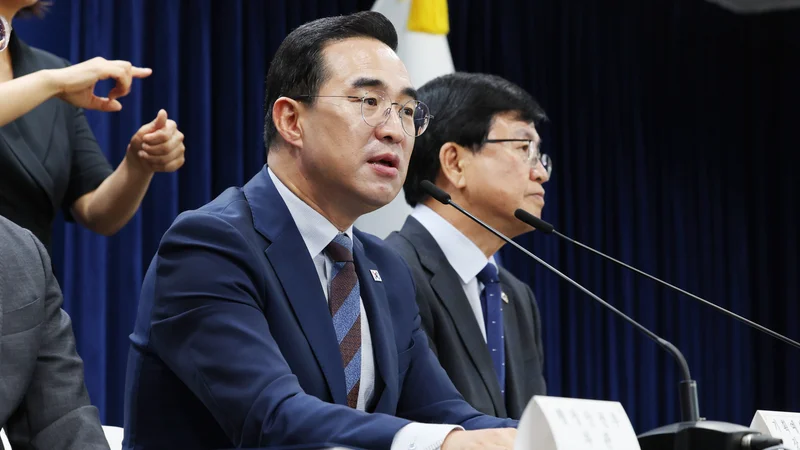
Image: Koreaherald
Main Takeaway
South Korea plans a Future Response Fund using semiconductor-driven tax windfalls to finance AI, youth programs and a buffer against weaker revenue.
Jump to Key PointsSummary
Seoul’s fiscal reservoir takes shape
South Korea plans to create a Future Response Fund that channels tax revenue generated by the semiconductor and AI boom into long-term investment and budget protection. The fund will support artificial intelligence, regional development, education, talent development and programs for younger people, including employment, housing and family formation.
The Ministry of Planning and Budget presented the initiative as a way to separate temporary windfall revenue from ordinary government income. Reserves would accumulate when semiconductor-related tax receipts exceed long-term trends, then support spending or cushion revenue declines when conditions weaken. The Korea Herald described the mechanism as a “fiscal reservoir,” while the budget ministry has framed it as a tool for more stable fiscal management.
Why chip revenue matters
South Korea’s fiscal plan rests on the country’s position in the global semiconductor supply chain. Strong demand for AI chips has lifted export activity and tax receipts, giving Seoul room to direct part of that increase toward future industries rather than treating it as permanent operating income.
The proposed approach also reflects the volatility of the chip cycle. Semiconductor demand can lift revenue sharply during periods of heavy investment in data centers and computing infrastructure, then weaken when inventories rise or capital spending slows. A ring-fenced fund gives the government a mechanism to retain part of the upswing and draw on it during a downturn, according to descriptions from Nationpress, Briefasia and Finance.yahoo.
The fund’s design links industrial policy with social policy. Youth employment, housing and family support sit alongside AI investment, regional development and workforce training, tying the chip boom to broader efforts to raise South Korea’s long-term growth rate.
The fund’s disputed price tag
Several accounts describe the initiative as a roughly $72 billion fund, but the figure is not consistently explained across the coverage. Aitoolly presents it as the planned fund’s headline scale, while Tekedia repeats the same estimate. Higher-reliability coverage describes a 100 trillion won Future Response Fund without providing the same dollar conversion or clarifying whether the amount represents an initial capitalization, a long-term target or the total value of planned allocations.
That distinction matters because the fund’s actual fiscal effect depends on its legal structure, funding schedule and rules for withdrawals. The stated principle is counter-cyclical: save excess revenue during strong years and release it when receipts weaken. The approach can reduce pressure to borrow during a downturn, but its credibility will depend on whether future governments preserve the reserve instead of redirecting it to routine spending.
A record budget expands the strategy
The Future Response Fund sits within a broader expansion of South Korea’s public spending on AI and strategic technology. A proposed 2027 budget totals 800 trillion won, or about $530.97 billion, according to EM360Tech, while Mexicobusiness puts the proposal at $596.9 billion and describes a 12.8% increase from 2026. The differing dollar figures reflect inconsistent reporting or conversion assumptions, but both accounts identify a record-scale budget and a sharper focus on AI and semiconductors.
Planned priorities include AI chips, data centers and physical AI, alongside research, talent and regional development. Lower net bond issuance is part of the fiscal picture described by Mexicobusiness, with semiconductor-driven revenue helping the government expand investment while limiting additional borrowing.
For companies, the policy points to state-backed demand for computing infrastructure, chip capacity, technical education and AI deployment. For universities and regional governments, it creates a route to compete for funding tied to talent and local economic development.
Debt markets are central to the plan
The fund is designed to act as a fiscal buffer and a brake on future debt issuance. Budget Minister Park Hong-keun described the concept as a “fiscal dam” in an interview with Bloomberg AI, linking accumulated AI and semiconductor revenue to protection against higher borrowing costs and weaker tax receipts.
That function gives the proposal significance beyond industrial subsidies. If reserves cover part of future spending during a revenue slowdown, Seoul can reduce the need to sell additional bonds. Lower issuance can ease pressure on government financing, though the result depends on the fund’s size, withdrawal rules and the persistence of semiconductor-related revenue.
The plan also exposes the government to a policy trade-off. Spending windfalls on AI and social programs can raise productive capacity, while retaining them can strengthen fiscal resilience. South Korea is attempting both by placing investment and stabilization inside one vehicle, a structure that will face scrutiny as the chip cycle changes.
What happens next
The next test is implementation. Seoul must define how windfall revenue is measured, how much enters the fund, which projects qualify and when reserves can be released. Those decisions will determine whether the Future Response Fund operates as a disciplined counter-cyclical reserve or becomes another channel for annual budget expansion.
The policy also needs to convert revenue into durable capabilities. AI spending will have greater economic value if it produces domestic compute capacity, skilled workers, research output and businesses that can compete beyond the current chip upswing. Youth support and regional investment will face a similar test: programs must connect funding to jobs, housing access, family formation and local growth.
South Korea is therefore using a semiconductor boom to finance both technology policy and fiscal insurance. The scale of the commitment, and the limits placed on withdrawals, will show how seriously Seoul intends to preserve that insurance when political demands rise.
Key Points
South Korea plans a Future Response Fund using semiconductor tax windfalls to finance AI and youth programs.
The fund would save excess revenue during strong chip cycles and support budgets during weaker years.
Seoul’s proposed 2027 budget directs record spending toward AI chips, data centers and physical AI.
Budget Minister Park Hong-keun calls the reserve a fiscal dam against higher yields and weaker receipts.
Reported fund estimates range from $72 billion to 100 trillion won across coverage.
Questions Answered
South Korea’s Future Response Fund is a proposed reserve and investment vehicle funded by semiconductor and AI-related tax windfalls. It would finance AI, youth support, regional development, education and talent programs while cushioning future revenue declines.
South Korea is creating the fund to turn cyclical chip-related tax gains into long-term economic investment and fiscal protection. The structure is intended to reduce pressure for additional borrowing when semiconductor revenue weakens.
South Korea’s Future Response Fund is described as roughly $72 billion in some accounts and 100 trillion won in others. The coverage does not establish whether those figures represent the same capitalization target, a long-term ceiling or different funding measures.
South Korea plans to spend the fund on AI, semiconductor-related infrastructure, data centers, physical AI, education, talent development, regional growth and youth programs. Youth initiatives include employment, housing and family-support measures.
South Korea’s budget minister meant that accumulated AI and semiconductor windfall revenue can hold back fiscal pressure during strong years and release support during weak years. The reserve can also reduce the need to issue additional government debt.
South Korea must set the fund’s revenue formula, funding schedule, eligible projects and withdrawal rules. Those decisions will determine whether the vehicle provides durable fiscal stabilization and productive AI investment.
Source Reliability
44% of sources are unrated · Avg reliability: 54
Go deeper with Organic Intel
Simple AI systems for your life, work, and business. Each one includes copyable prompts, guides, and downloadable resources.
Explore Systems