Reid Hoffman and Mark Pincus Back Prentis, an AI Lab Targeting $100M Raise to Automate Office Workflows
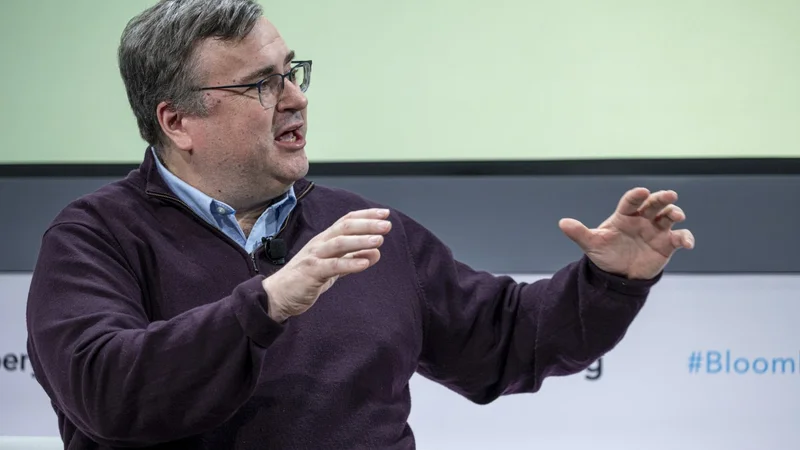
Image: TechCrunch AI
Main Takeaway
Prentis, co-founded by Reid Hoffman, Mark Pincus, and Ritankar Das, is in talks to raise $100 million at a $1 billion valuation to build AI agents.
Jump to Key PointsSummary
The founding team and the billion-dollar ambition
A new AI research lab called Prentis is in talks to secure $100 million in funding at a $1 billion valuation, according to two people familiar with the discussions who spoke to TechCrunch. The startup, which launched in April, was co-founded by serial entrepreneur Ritankar Das alongside tech heavyweights Reid Hoffman and Mark Pincus. Hoffman brings his experience as LinkedIn's co-founder and a prolific AI investor, while Pincus is known for founding Zynga and his early bets on social platforms. Das, the CEO, contributes deep technical leadership to the venture.
The $1 billion valuation target signals major investor confidence in a company that's barely a few months old. Prentis has already signed contracts worth up to $50 million with several customers, including a healthcare management services provider, demonstrating early commercial traction that likely underpins the aggressive fundraising terms.
What Prentis actually builds
Prentis is training what it calls computer use models. These are AI systems designed to observe and learn how office workers navigate routine workflows across documents and internal systems, then replicate those actions. The goal is to build AI agents that can control computers directly, clicking through interfaces, filling forms, and moving data between applications without human intervention.
The startup’s thesis is that automating routine computer tasks will soon outpace coding as AI's biggest use case. Instead of writing code to automate a process, Prentis agents watch a human do the task once and then take over. This approach targets the sprawling, unglamorous work that fills white-collar days: processing insurance claims, reconciling spreadsheets, and chasing down paperwork for customs duty refund exceptions.
Why computer use models are the next frontier
Computer use agents represent a shift from AI that generates content to AI that performs actions. Rather than outputting text or code, these models interact with graphical user interfaces the way a person would, clicking buttons, filling fields, and navigating menus. This capability doesn't require APIs or backend access, it works on top of existing software.
For enterprises, the appeal is straightforward: millions of employees spend hours each week on repetitive computer tasks that don't require judgment, only persistence. Prentis is betting that automating this layer of work delivers faster ROI than building custom integrations or retraining staff. The company's early contracts in healthcare and logistics suggest demand is real, not theoretical.
The heavyweight co-founders and their track record
Reid Hoffman’s involvement gives Prentis a direct line to Silicon Valley’s power networks. As LinkedIn’s co-founder and a partner at Greylock, Hoffman has backed some of the most consequential AI companies of the past decade. Mark Pincus, the Zynga founder, brings product intuition and a track record of building consumer-scale platforms. Ritankar Das rounds out the leadership with technical and operational depth.
This isn’t Hoffman’s first AI venture. He previously co-founded Inflection AI with Mustafa Suleyman and Karén Simonyan, a company that raised over $1 billion before pivoting to enterprise AI. Prentis appears to be a more focused bet, zeroing in on a single paradigm rather than building a general-purpose assistant.
How this shifts the AI agent landscape
Prentis enters a market that’s already crowded. Companies like Adept, backed by $350 million in funding, are building similar computer use agents. OpenAI and Anthropic have both signaled interest in models that can control software. Google’s DeepMind has published research on GUI-navigating agents. Prentis differentiates by targeting specific enterprise workflows from day one and signing revenue contracts before closing its first major funding round.
The lab’s approach also sidesteps the developer-tooling market entirely. Instead of selling to engineering teams, Prentis sells to operations leaders who want to automate without writing code. If the thesis holds, computer use models could eat into the RPA market and reshape how enterprises think about automation budgets.
What happens next
Prentis is still in talks for the $100 million raise, meaning the deal isn’t finalized and terms could shift. The company’s early customer contracts provide a revenue base that most AI labs at this stage lack, which should strengthen its negotiating position. If the round closes at the reported valuation, Prentis will be one of the fastest AI startups to reach unicorn status from launch.
The broader signal is worth watching. When a founder of Hoffman’s caliber commits to computer use models over generative coding tools, it suggests a conviction that the next wave of AI value won’t come from helping developers write code, but from replacing the work that happens after the code is already written. Enterprise buyers and investors will be watching closely.
Key Points
Prentis, co-founded by Reid Hoffman, Mark Pincus, and Ritankar Das, is in talks to raise $100 million at a $1 billion valuation.
The AI lab trains computer use models that automate routine office workflows by controlling software directly.
Prentis has already signed customer contracts worth up to $50 million, including a healthcare management services provider.
The startup’s thesis predicts that automating computer tasks will outpace coding as AI's largest use case.
Computer use agents bypass API integration by navigating graphical interfaces the same way human workers do.
Questions Answered
Prentis is an AI research lab co-founded by Reid Hoffman, Mark Pincus, and Ritankar Das that builds computer use models. These AI agents learn how office workers navigate routine workflows across documents and systems, then automate those tasks by controlling computers directly without human intervention.
Prentis is in talks to raise $100 million at a $1 billion valuation, according to two people familiar with the discussions. The round hasn't been finalized yet, but the company has already signed customer contracts worth up to $50 million.
Prentis was co-founded by serial entrepreneur Ritankar Das and tech heavyweights Reid Hoffman, the co-founder of LinkedIn, and Mark Pincus, the founder of Zynga. Hoffman and Pincus bring significant Silicon Valley experience and investor networks to the startup.
Prentis is initially targeting healthcare management services and other enterprise customers that handle routine paperwork. The company's agents can automate tasks like insurance claim processing and customs duty refund exceptions without needing a human to locate paperwork.
Prentis focuses on computer use models rather than code generation. Instead of helping developers write code, its agents learn to control existing software interfaces directly, clicking, typing, and navigating applications the way a human worker would, which means it doesn't require API access or custom integrations.
Source Reliability
50% of sources are highly trusted · Avg reliability: 60
Go deeper with Organic Intel
Simple AI systems for your life, work, and business. Each one includes copyable prompts, guides, and downloadable resources.
Explore Systems