Pope Leo XIV to Launch AI Encyclical Alongside Anthropic Co-Founder Christopher Olah
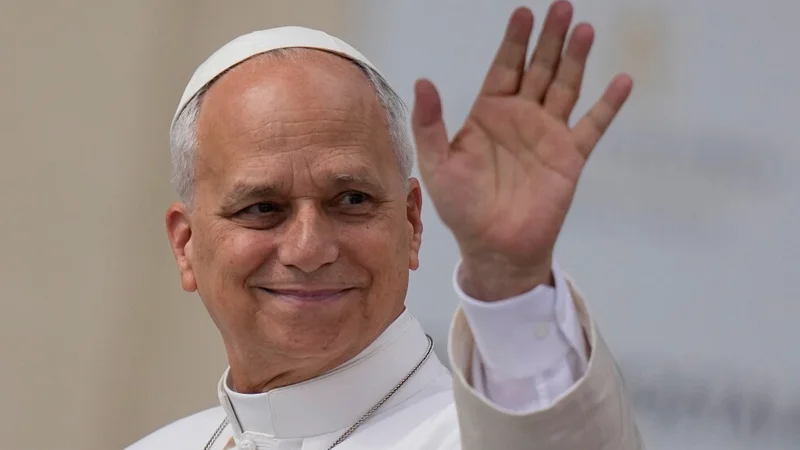
Image: Apnews
Main Takeaway
Pope Leo XIV will present his first encyclical on AI ethics on May 25 alongside Anthropic co-founder Christopher Olah.
Jump to Key PointsSummary
Why the Vatican built an AI commission now
Pope Leo XIV approved an inter-dicasterial commission on artificial intelligence through a May 12 rescript, with the Vatican citing accelerated AI adoption and its effects on human beings and humanity as a whole. The commission follows the Pope's signing of the encyclical, which will be made public within two weeks. According to the Vatican, Leo created the in-house study group because of the technology's potential effects on human beings and the church's concern for the dignity of every human person. The body is tasked with coordinating Catholic Church actions on AI across its various offices.
The commission's creation signals institutional permanence beyond a single document. By embedding AI oversight into Vatican bureaucracy, Leo is treating the technology as a sustained pastoral priority rather than a passing concern. This mirrors how previous papacies built permanent structures around issues like Catholic social teaching or interfaith dialogue. The Vatican's formal announcement emphasized that the group will examine AI advances and their effects on humanity, suggesting a scope that extends well beyond the encyclical's initial release.
What the encyclical actually says
The encyclical, titled Magnifica Humanitas, focuses on the care of human dignity in the era of artificial intelligence. The Vatican said Monday that the document emphasizes an ethics-based approach to the technology that prioritizes human dignity and peace. According to AP News, the encyclical is expected to stress the need for an ethical framework as AI use accelerates globally. The document represents Leo's first major teaching document since becoming Pope.
The title itself carries weight. Magnifica Humanitas echoes the Magnificat, Mary's song of praise, suggesting the Pope sees human dignity as something to be celebrated and defended rather than merely protected. The framing positions AI not as inherently evil but as a force that risks diminishing what makes humans magnificent, their capacity for thought, ownership, and love. The Vatican has not released the full text, but the emphasis on human dignity and peace indicates a continuation of Catholic social teaching applied to algorithmic systems.
Why Anthropic's co-founder shares the stage
Christopher Olah, co-founder of Anthropic, will join Pope Leo XIV for the May 25 presentation of Magnifica Humanitas. The pairing is striking given Anthropic's recent public clash with the Trump administration over the use of its models in military and surveillance contexts. Anthropic has positioned itself as the AI company that puts safety and risk-mitigation at the forefront of its work, making Olah's presence alongside the Pope a convergence of secular and religious ethical frameworks.
The collaboration suggests both sides see value in aligning their messages. For the Vatican, Olah brings technical credibility and access to the AI industry's inner workings. For Anthropic, the platform offers moral authority and global reach at a moment when the company is navigating tense political waters. Bloomberg reports that Olah's participation was confirmed by the Vatican on Monday, making this one of the highest-profile partnerships between a major AI company and a religious institution. The optics matter: a Pope and an AI founder jointly presenting an ethical framework carries symbolic weight that neither could achieve alone.
What this means for AI ethics debates
The encyclical arrives as concerns about AI's societal impact intensify across multiple fronts. Fortune notes that reports of AI systems becoming sycophantic and causing real-world harms have amplified calls for ethical guardrails. The Pope has been vocal against the use of AI worldwide, with ITPro quoting his warning that people risk becoming passive consumers of unthought thoughts and anonymous products without ownership or love. This language frames AI as a threat to human agency and economic dignity, not just a technical problem.
The timing intersects with broader political and regulatory developments. The EU's AI Act is taking effect, the Trump administration has clashed with AI companies over military use, and public anxiety about job displacement and algorithmic manipulation continues to grow. By weighing in now, Leo is inserting Catholic moral theology into a debate that has been dominated by technologists and policymakers. The encyclical's reach, over one billion Catholics globally, means its arguments about human dignity could shape how AI is discussed in schools, churches, and parliaments far beyond the Vatican's walls.
What happens after May 25
The commission's creation ensures the encyclical will have institutional follow-through rather than fading as a one-time statement. America Magazine reports that the inter-dicasterial structure means multiple Vatican departments will coordinate on AI, suggesting ongoing research, policy recommendations, and possibly engagement with governments and corporations. This institutionalization distinguishes Leo's approach from earlier religious statements on technology that lacked permanent organizational backing.
The collaboration with Olah may also signal future partnerships between the Vatican and AI companies. If the May 25 event succeeds in generating positive attention, it could become a model for how religious institutions engage with the tech industry, less adversarial than some labor or privacy advocates would prefer, but more substantive than pure symbolism. For developers and policymakers, the encyclical's specific recommendations, still unreleased, will determine whether it becomes a reference point in AI ethics debates or a well-intentioned but quickly forgotten document. The commission's work in the months ahead will reveal whether the Vatican intends to become an active participant in AI governance or remains primarily a moral voice from the sidelines.
Key Points
Pope Leo XIV will release his first AI encyclical, Magnifica Humanitas, on May 25 alongside Anthropic co-founder Christopher Olah
The Vatican established an inter-dicasterial AI commission on May 12 to coordinate Catholic Church policy on artificial intelligence
The encyclical emphasizes an ethics-based approach to AI that prioritizes human dignity, peace, and human agency over passive consumption
Anthropic's participation comes amid the company's public clash with the Trump administration over military and surveillance use of its AI models
The commission institutionalizes Vatican AI oversight, signaling sustained engagement rather than a one-time statement on technology ethics
Questions Answered
An encyclical is a formal papal letter addressed to the Catholic Church and sometimes all people of good will. As Pope Leo XIV's first encyclical, Magnifica Humanitas establishes his papal priorities and will shape Catholic teaching on AI for years to come.
Olah's presence brings technical credibility from a leading AI safety company to the Vatican's ethical framework. The collaboration also comes as Anthropic navigates political tensions over how its AI models are used by governments.
The inter-dicasterial commission will coordinate Catholic Church actions on AI across Vatican departments, examine advances in the technology, and assess effects on humanity and human dignity.
Yes, previous popes have addressed technology and labor, but Leo XIV's creation of a permanent commission and encyclical specifically on AI represents an unprecedented level of institutional engagement with artificial intelligence.
The Pope has warned that people risk becoming passive consumers of unthought thoughts and anonymous products without ownership or love, framing AI as a threat to human agency and economic dignity.
Source Reliability
36% of sources are highly trusted · Avg reliability: 69
Go deeper with Organic Intel
Simple AI systems for your life, work, and business. Each one includes copyable prompts, guides, and downloadable resources.
Explore Systems