OpenAI opens ChatGPT Health to all US adults, claiming AI reasoning surpasses clinicians

Image: The Verge AI
Main Takeaway
OpenAI rolled out ChatGPT Health to all US users over 18 on Thursday, letting them connect medical records and wellness data while the company's health VP.
Jump to Key PointsSummary
What ChatGPT Health actually does
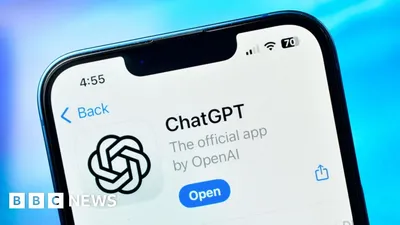
OpenAI launched ChatGPT Health to all US-based users over 18 across every subscription plan on Thursday, transforming the chatbot into a tool that can ingest, analyze, and respond to questions about personal medical records and health tracking data. The feature connects to external services including Apple Health, Function, and MyFitnessPal, pulling in everything from step counts and sleep patterns to lab results and clinical notes, according to TechCrunch.
Users can upload PDFs of blood work, immunization records, or specialist reports directly into the chat interface. The system then parses those documents and allows follow-up questions about trends, flagged abnormalities, or comparisons against baseline ranges. Reuters reports the tool is positioned as a wellness companion rather than a diagnostic device, though the line blurs quickly when a user asks it to interpret an out-of-range thyroid panel or suggest next steps after an abnormal MRI finding.
The timing and the lawsuit shadow
The nationwide rollout arrived one day after a Florida pastor sued OpenAI, alleging ChatGPT Health gave him a near-fatal suggestion to avoid consulting a doctor, as reported by The New York Times and cited by TechCrunch. The lawsuit claims the system advised against seeking medical attention for symptoms that later required emergency intervention. OpenAI has not publicly commented on the specifics of that case, but the juxtaposition of a full public launch immediately following such a high-profile legal filing raised eyebrows among industry watchers.
Ashley Alexander, OpenAI's vice president of health product, used a Thursday press briefing to make an aggressive counterclaim: the company's models "are now capable of reasoning at levels that are better than clinician level." The Verge noted that OpenAI did not provide peer-reviewed studies or third-party validation to support that assertion when pressed. The claim itself marks a sharp escalation in how AI companies talk about medical competence, moving from "assistive tool" language to direct performance comparisons with licensed professionals.
How data integration and privacy work
ChatGPT Health's data connections rely on OAuth-based integrations with third-party platforms. When a user links their Apple Health account, the system gains read access to metrics like heart rate variability, exercise minutes, and sleep stages. MyFitnessPal contributes nutritional intake and weight logs. Function, a newer lab-testing service, feeds in biomarker panels. OpenAI's help documentation emphasizes that health data is not used for model training by default, and users retain the ability to disconnect integrations or delete stored records at any time.
Privacy experts quoted by Time questioned whether the average consumer understands the downstream implications of handing an AI system their longitudinal health profile. Unlike a doctor's office bound by HIPAA, consumer AI tools operate in a regulatory gray zone. OpenAI states that ChatGPT Health complies with applicable privacy laws, but the company hasn't specified which laws those are or how compliance is audited. Fiercehealthcare noted that several health systems have been piloting the tool since earlier this year, suggesting enterprise-grade agreements may carry stronger protections than the consumer-facing terms.
The safety debate intensifies
Axios framed the launch as the center of a growing safety debate, with patient advocates and some clinicians warning that AI health tools risk substituting algorithmic pattern matching for clinical judgment. The core tension: ChatGPT Health can surface correlations a busy doctor might miss, but it can also hallucinate drug interactions, misinterpret normal variance as pathology, or recommend unnecessary follow-up testing that drives up costs and anxiety.
OpenAI's own safety documentation, referenced by Help.openai, instructs users that ChatGPT Health is not a medical device and should not be used for emergency or urgent care decisions. Yet the product design, which actively encourages uploading medical records and asking interpretive questions, pulls users toward exactly those use cases. CNBC reported that the rollout includes disclaimers in the interface, but the disclaimers appear as dismissible banners rather than persistent warnings. The American Medical Association has not issued a formal statement on the launch as of Thursday afternoon.
What OpenAI says about clinical reasoning
The claim that OpenAI's models reason "better than clinician level" represents a deliberate messaging shift. Alexander did not specify which models, which clinical tasks, or which clinician benchmarks were used for comparison. The Verge pressed for details and received no supporting data. This isn't the first time an AI company has made ambitious health claims: Google previously walked back statements about its medical AI after external researchers identified flaws in validation methodology.
Healthcare Dive noted that OpenAI's enterprise healthcare push, detailed on its corporate site, targets hospital systems with a different product tier that includes HIPAA business associate agreements. The consumer ChatGPT Health launch appears to be a scaled-down version of those enterprise capabilities, minus the contractual safeguards. For OpenAI, the consumer rollout serves a dual purpose: it gathers real-world usage data at scale while normalizing the idea of AI-as-health-advisor among millions of users.
What happens next for users and regulators
The immediate question is whether the Florida lawsuit gains traction and whether other plaintiffs follow. A class-action filing or a state attorney general inquiry could force OpenAI to disclose internal safety testing results that the company declined to share during Thursday's briefing. The FDA has historically regulated software that makes clinical recommendations, and ChatGPT Health's interpretive capabilities may eventually attract the agency's attention, though no formal review has been announced.
For users, the practical next step is deciding whether to connect their health data. The feature is opt-in, and early adopters will effectively serve as a massive unstructured beta test. OpenAI said 230 million users now have access, per TechCrunch, creating one of the largest instant deployments of an AI health tool in history. Whether that scale produces insights that improve the system or surfaces failure modes that trigger regulatory action remains the central unknown.
The broader industry ripple effects
Apple, which has spent years positioning its health ecosystem as a privacy-first differentiator, now sees one of its key data sources plugged directly into a third-party AI system. Google, which operates its own health AI initiatives through Verily and Fitbit integrations, faces a competitor that just captured the default consumer AI channel. Microsoft, OpenAI's largest backer, gains indirect exposure to a health data pipeline that could feed its cloud and enterprise healthcare ambitions.
Startups building AI health coaching apps, including those funded heavily over the past two years, now compete with a free feature inside a product their target users already have installed. The speed of the rollout, from limited pilot to 230 million users overnight, resets expectations for how fast AI health tools can scale when they piggyback on existing consumer platforms rather than navigating healthcare procurement cycles.
Key Points
OpenAI launched ChatGPT Health to all 230 million US users over 18, enabling medical record and wellness data connections.
The rollout came one day after a Florida pastor sued OpenAI over an allegedly near-fatal health suggestion from the tool.
OpenAI's health VP claimed company models now reason at levels better than clinician level, without providing supporting evidence.
Users can integrate data from Apple Health, Function, and MyFitnessPal, with upload support for lab results and clinical documents.
Privacy experts warned consumer AI health tools operate in a regulatory gray zone outside HIPAA's protections.
Questions Answered
ChatGPT Health is an OpenAI feature that lets users connect their medical records and health tracking data to the chatbot for analysis and questions. As of July 23, 2026, it is available to all US-based users over 18 across every subscription plan, reaching approximately 230 million people.
ChatGPT Health integrates with Apple Health for fitness and vitals data, Function for lab biomarker panels, and MyFitnessPal for nutrition and weight tracking. Users can also manually upload PDFs of blood work, immunization records, and specialist reports directly into the chat interface.
OpenAI's own documentation states ChatGPT Health is not a medical device and should not be used for emergency or urgent care decisions. The launch has sparked safety concerns from clinicians and patient advocates about hallucination risks, misinterpreting normal results as pathology, and the tool's potential to substitute algorithmic matching for clinical judgment.
Ashley Alexander, OpenAI's vice president of health product, claimed during a press briefing that the company's models are now capable of reasoning at levels better than clinician level. OpenAI did not provide peer-reviewed studies, specific benchmarks, or third-party validation to support this assertion when asked by reporters.
The consumer version of ChatGPT Health operates in a regulatory gray zone and is not covered by HIPAA, which applies to healthcare providers and their business associates. OpenAI offers a separate enterprise healthcare tier that includes HIPAA business associate agreements for hospital systems, but the consumer product lacks those contractual safeguards.
One day before the nationwide launch, a Florida pastor sued OpenAI alleging ChatGPT Health gave him a near-fatal suggestion to avoid consulting a doctor for symptoms that later required emergency intervention. The lawsuit's proximity to the full public rollout has intensified scrutiny of the tool's safety and liability framework.
Source Reliability
73% of sources are highly trusted · Avg reliability: 79
Go deeper with Organic Intel
Simple AI systems for your life, work, and business. Each one includes copyable prompts, guides, and downloadable resources.
Explore Systems