OpenAI Hires Uber India Chief Prabhjeet Singh to Lead Its Second-Largest Market
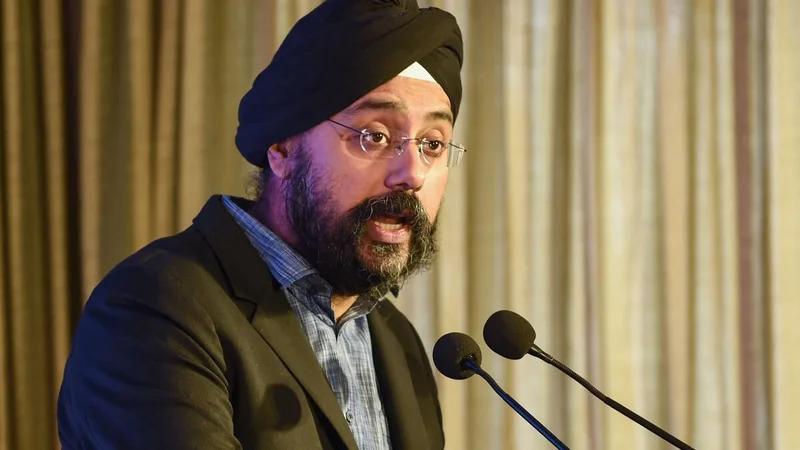
Image: Bloomberg AI
Main Takeaway
OpenAI appointed Prabhjeet Singh, former Uber India president, as managing director for India starting September to scale its second-biggest market.
Jump to Key PointsSummary
Why India matters for OpenAI's global strategy
OpenAI has named Prabhjeet Singh, former president of Uber India and South Asia, as its first managing director for India, a hire that signals the company's intensified focus on what it calls its second-largest market after the United States. According to TechCrunch, Singh will join in September and report to Kiran Mani, OpenAI's managing director for Asia Pacific, placing him at the helm of the company's most significant market outside its home base. The appointment comes as OpenAI seeks to convert India's massive user base into deeper enterprise adoption and strategic partnerships.
India represents a unique inflection point for OpenAI. The country has rapidly become one of ChatGPT's biggest markets, yet converting that consumer traction into sustainable revenue streams, particularly among businesses and government clients, requires localized leadership with deep operational experience. Bloomberg reports that the hire reflects OpenAI's intent to deepen investment in one of its fastest-growing markets, suggesting the company sees India not merely as a user acquisition target but as a hub for long-term revenue generation. Singh's mandate spans user growth, enterprise adoption, partnerships, and government engagement, a portfolio that touches nearly every lever of market expansion.
Singh's Uber tenure and what it signals about OpenAI's priorities
Singh arrives with 11 years at Uber, a ride-hailing giant that fought and largely won one of the most bruising market-entry battles in India's tech history. According to the Economic Times, he led Uber through significant growth phases and strategic shifts, including the expansion of premium services, navigating regulatory headwinds, and competing against well-funded local rivals. That experience translates directly to OpenAI's challenges, which include convincing Indian enterprises to pay for AI tools, building trust with regulators wary of foreign technology platforms, and fending off competition from domestic players and global rivals alike.
His background as an local market operator, rather than a product or research specialist, tells a clear story about OpenAI's current phase. The company is past the point where pure technical excellence guarantees adoption, it needs executives who can negotiate with New Delhi, structure channel partnerships, and adapt pricing to Indian purchasing power. Livemint notes Singh's credentials as an IIT-IIM alumnus, markers of elite Indian education that carry weight in business and government circles. This is not a hire for Silicon Valley cachet, it is a hire for doors opened and deals closed.
The competitive terrain for AI in India
OpenAI's India push unfolds against a crowded and increasingly nationalist technology landscape. Domestic competitors such as Krutrim, Ola founder Bhavish Aggarwal's AI venture, have explicitly positioned themselves as homegrown alternatives to foreign platforms. Google's Gemini and Microsoft's Copilot both maintain substantial presence in India, while Meta has invested heavily in local language AI capabilities. Singh will need to articulate why Indian enterprises and government bodies should entrust sensitive data and workflows to an American company rather than emerging local options.
The regulatory environment adds another layer of complexity. India's government has shown increasing willingness to impose data localization requirements and content moderation obligations on foreign tech platforms, lessons from Uber's own regulatory battles that Singh knows firsthand. According to Indian Television, OpenAI timed this announcement alongside the release of GPT-5.6 Sol, a model marketed with its toughest safety controls yet, suggesting the company recognizes that winning India requires more than product superiority, it demands proactive trust-building on governance and safety. Singh's government engagement mandate will be tested early and often.
What this means for OpenAI's Asia Pacific expansion
Singh's reporting line to Kiran Mani, OpenAI's Asia Pacific managing director, reveals the company's regional architecture and hints at broader ambitions. Rather than running India as a standalone fiefdom, Singh sits within a larger APAC structure that allows for coordinated strategy across Southeast Asia, Japan, South Korea, and Australia. This model lets OpenAI share learnings from India's price-sensitive market dynamics with other developing economies while leveraging developed-market revenue from Japan and Australia to fund expansion.
The hire also reflects a broader pattern among American AI companies staffing up internationally ahead of anticipated regulatory and competitive developments. Reuters characterized the move as tapping a regional chief for India leadership, framing it within a wave of similar appointments as AI firms race to establish local presence before regulatory frameworks crystallize. For OpenAI, getting the right leader in place now, before India's AI governance rules are fully baked, could determine whether the company shapes or is shaped by those regulations. The September start date gives Singh a narrow window to build relationships before key policy decisions take hold.
\ Landsat
What happens next for OpenAI in India
Industry observers expect a rapid buildout of OpenAI's India operations under Singh's leadership, including expanded office presence, localized hiring, and potentially India-specific product features or pricing. The company has already begun scaling its physical footprint, and TechCrunch reports that this appointment accelerates a broader push into partnerships and talent acquisition. Enterprise deals with Indian conglomerates, technology services firms, and government agencies are likely near-term priorities, along with educational partnerships that can seed ChatGPT familiarity among India's massive student population.
The success metric for Singh will be straightforward but difficult: demonstrate that India can become a top-three revenue market for OpenAI within three to five years. That requires moving beyond the freemium consumer base that has made India large in user numbers but modest in revenue contribution. It also means navigating the tension between OpenAI's global product standardization and India's demand for vernacular language support, local compliance, and culturally adapted use cases. Whether Singh can replicate his Uber success, building a foreign tech platform into a dominant local player, will determine if this hire becomes a template for how AI companies expand globally or a cautionary tale about the limits of transplanting executives across industries.
Key Points
OpenAI named Prabhjeet Singh, former Uber India president, as its first India managing director starting September 2026.
Singh will report to Asia Pacific chief Kiran Mani and oversee user growth, enterprise sales, partnerships, and government engagement.
India ranks as OpenAI's second-largest market by users after the United States but remains early in revenue contribution.
Singh spent 11 years at Uber leading market expansion through regulatory challenges and competitive pressure from local rivals.
The hire signals OpenAI's transition from product-led growth to localized operational execution in key international markets.
Questions Answered
OpenAI hired Prabhjeet Singh, the former president of Uber India and South Asia, as its first managing director for India. He will start in September 2026 and report to Kiran Mani, OpenAI's Asia Pacific managing director. Singh spent 11 years at Uber leading the company's expansion in India.
India represents OpenAI's second-largest market by user numbers after the United States, according to company statements reported by TechCrunch and other outlets. The company sees substantial opportunity to convert this large consumer base into enterprise revenue and deepen partnerships with Indian businesses and government agencies.
Singh brings 11 years of operational leadership at Uber, where he navigated intense competition from domestic rivals, regulatory scrutiny, and the challenge of building a foreign tech platform into a market leader. His background as an IIT and IIM alumnus also provides established credibility in Indian business and policy circles.
Singh will lead India as part of OpenAI's Asia Pacific region, reporting to managing director Kiran Mani. This structure allows coordination with other APAC markets while enabling India-specific strategies for pricing, partnerships, and regulatory compliance.
OpenAI competes with domestic ventures like Krutrim, founded by Ola's Bhavish Aggarwal, as well as global platforms including Google's Gemini, Microsoft's Copilot, and Meta's AI offerings. Each competitor emphasizes different strengths: local identity, enterprise integration, or consumer reach.
Source Reliability
42% of sources are trusted · Avg reliability: 67
Go deeper with Organic Intel
Simple AI systems for your life, work, and business. Each one includes copyable prompts, guides, and downloadable resources.
Explore Systems