Nobel Laureate John Jumper Leaves Google DeepMind for Anthropic in Major AI Talent Shift
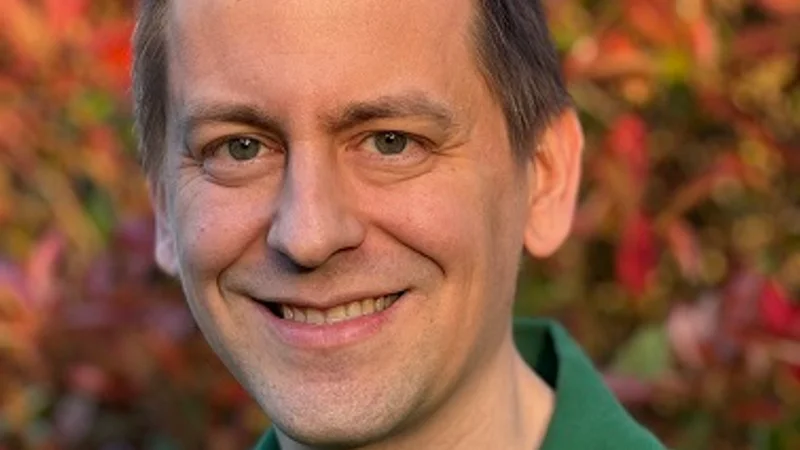
Image: Royalsociety
Main Takeaway
Nobel Prize winner John Jumper departs Google DeepMind after nearly 9 years to join rival AI startup Anthropic, deepening the talent war among top labs.
Jump to Key PointsSummary
Why a Nobel winner is switching labs
John Jumper Jumper, who shared the 2024 Nobel Prize in Chemistry with Google DeepMind CEO Demis Hassabis for co-creating AlphaFold, announced on June 19 that he is leaving the company after nearly nine years. His move to Anthropic marks one of the most significant individual talent transfers between rival AI organizations in recent years. According to Bloomberg, Jumper served as Vice President at Google DeepMind and led the AlphaFold team through its breakthrough iterations. The departure follows a pattern of senior researchers leaving established labs for newer competitors, with the AI talent market showing no signs of cooling. Jumper's own social media post framed the departure with personal gratitude toward Hassabis, which AI Weekly noted helps rule out institutional friction as the primary driver.
The protein structure prediction system Jumper helped build has become foundational to modern biological research. AlphaFold has predicted over 200 million protein structures, compressing research timelines that previously spanned years into computational problems solvable in hours. This scientific legacy makes his move particularly notable, as it represents a transfer of expertise developed inside Google's well-funded research environment to a startup competitor.
What this signals about Google's retention crisis
Jumper's exit arrives just days after another major departure: Noam Shazeer, co-lead of Google's Gemini project, left for OpenAI. CNBC explicitly linked the two events as part of a broader pattern of high-profile exits from Google's AI research and development division. The timing creates a perception problem for Google, even if the actual causes differ. When Nobel-caliber researchers and project leads depart within the same week, recruitment and retention challenges become harder to dismiss as isolated incidents.
Google DeepMind has historically been one of the most desirable destinations for AI researchers, combining academic freedom with industry-scale computing resources. The loss of Jumper specifically stings because his work sat at the intersection of fundamental research and real-world scientific impact, the exact positioning Google has used to distinguish its AI efforts from more product-focused competitors. His departure suggests that even this positioning may no longer guarantee loyalty from top-tier talent.
How Anthropic gains scientific credibility
Anthropic has been building out its biological research infrastructure before Jumper's arrival became public. AI Weekly reported that the company had already established wet lab capabilities and secured partnerships with the Howard Hughes Medical Institute and the Allen Institute. Jumper's hiring gives Anthropic immediate scientific gravitas in a domain where the company previously lacked a public-facing research leader. The move also diversifies Anthropic beyond its core focus on large language model safety and capabilities.
The protein folding and drug discovery space represents a natural expansion area for AI companies seeking to demonstrate tangible real-world impact. Unlike consumer chatbots, scientific applications offer clearer metrics for success and stronger intellectual property moats. Jumper's expertise in adapting machine learning architectures to biological data could accelerate Anthropic's efforts in this direction. Whether he will replicate his AlphaFold success in a new organizational context remains an open question, but his presence alone changes how potential partners and competitors view Anthropic's scientific ambitions.
The broader talent war reshaping AI research
The competitive dynamics between OpenAI, Google, Anthropic, and Meta have created a fluid labor market where researchers move frequently and command extraordinary compensation packages. CNBC noted that tech giants and startups alike are locked in intense competition for the limited pool of researchers capable of advancing frontier AI systems. Jumper's move exemplifies how scientific reputation has become portable currency in this environment, with individual researchers carrying institutional knowledge and collaborative networks across organizational boundaries.
This mobility has structural implications for how AI research gets conducted and who controls its direction. When a Nobel winner leaves an established lab for a startup, it signals that the startup's resources and mission have reached sufficient maturity to attract rather than merely poach talent. For Anthropic specifically, landing Jumper represents a validation of its research culture and long-term positioning. The transaction also raises questions about whether traditional academic and industry research institutions can maintain their historical role as the primary training grounds for elite AI researchers, or whether that function is fragmenting across a more distributed landscape of well-funded private labs.
What happens to AlphaFold's future
Google DeepMind retains the AlphaFold intellectual property and the team Jumper built, but leadership transitions in scientific research always carry execution risk. The Royal Society's profile of Jumper emphasized his role in developing "entirely new machine learning architectures" for biological data, suggesting his technical contributions may be difficult to fully replace. Demis Hassabis posted a public thanks to Jumper following the announcement, a gesture that Times of India interpreted as an acknowledgment of the departure's significance.
AlphaFold3, the most recent iteration, expanded beyond protein structures to model DNA, RNA, and small molecules, indicating the project's continued evolution. Whether this trajectory continues smoothly depends on the remaining team's capacity to maintain the research momentum Jumper helped establish. For the broader scientific community that relies on AlphaFold's predictions and tools, the immediate operational impact appears minimal, but the long-term strategic direction of Google's biological AI research now faces greater uncertainty. The coming months will reveal whether Jumper's exit prompts further departures or if Google can stabilize its scientific AI division.
Key Points
Nobel laureate John Jumper leaves Google DeepMind to join rival AI startup Anthropic after nearly-studio 9-year tenure
Jumper co-created AlphaFold, which predicted 200 million protein structures and won the 2024 Nobel Prize in Chemistry
The departure follows Noam Shazeer's exit from Google to OpenAI, intensifying perceptions of a Google AI retention crisis
Anthropic had already built wet lab infrastructure and secured HHMI and Allen Institute partnerships before announcing Jumper's hire
Jumper's post cited personal gratitude to Demis Hassabis, suggesting the move was not driven by institutional conflict
Questions Answered
John Jumper is leaving Google DeepMind to join Anthropic after nearly nine years, citing personal gratitude toward DeepMind CEO Demis Hassabis in his public announcement. The move appears driven by new opportunities rather than institutional friction, though the exact role at Anthropic has not been detailed.
John Jumper co-created AlphaFold, the AI system that predicted over 200 million protein structures and won him the 2024 Nobel Prize in Chemistry alongside Demis Hassabis. He led the AlphaFold2 and AlphaFold3 teams and developed new machine learning architectures for biological data during his nearly nine years at the company.
Google DeepMind retains AlphaFold's intellectual property and engineering team, so immediate operations continue. However, Jumper's unique technical contributions to the system's core architectures create longer-term execution risk, and his exit may signal broader retention challenges within Google's scientific AI division.
Anthropic gains significant scientific credibility and biological AI expertise that it previously lacked publicly. The company had already invested in wet lab infrastructure and partnerships with HHMI and the Allen Institute, suggesting Jumper's hiring accelerates existing ambitions rather than creating new capabilities from scratch.
Yes, John Jumper's departure closely follows Noam Shazeer's exit from Google Gemini to OpenAI, forming a pattern of senior AI researchers leaving Google for direct competitors. These moves occur amid an industry-wide talent war where startups and tech giants compete aggressively for limited frontier AI expertise.
Source Reliability
38% of sources are highly trusted · Avg reliability: 67
Go deeper with Organic Intel
Simple AI systems for your life, work, and business. Each one includes copyable prompts, guides, and downloadable resources.
Explore Systems