Nikon Disqualifies AI-Flagged Microscopy Winner and Names Vietnam’s Nguyen Nam Nhat New Champion
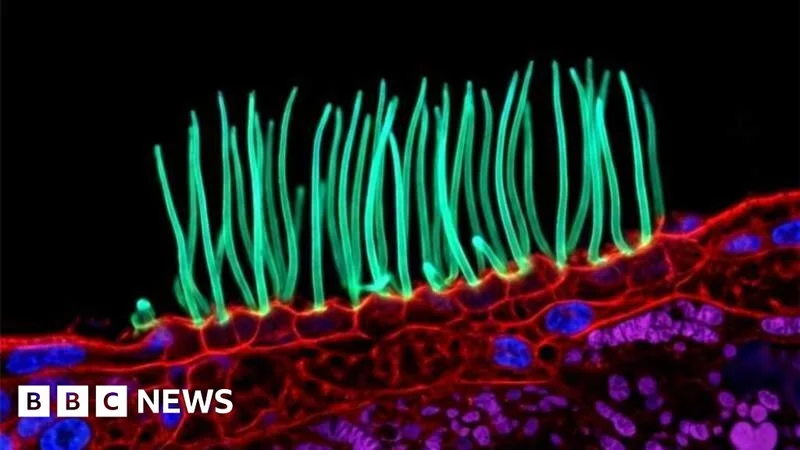
Image: Bbc
Main Takeaway
Nikon disqualified Ning Xu’s winning microscopy video after an AI rules violation and awarded first place to Nguyen Nam Nhat for footage of microscopic organisms.
Jump to Key PointsSummary
Nikon changes the competition result
Nikon has removed Ning Xu’s first-place award in the 2026 Small World in Motion competition after determining that the entry violated rules governing generative AI. The decision followed criticism from scientists and renewed review of a video showing abnormal airway cilia from a child with Primary Ciliary Dyskinesia, a genetic disorder affecting respiratory function. Nikon then named Nguyen Nam Nhat of Vietnam as the new winner, according to Ars Technica AI.
The reversal closes a dispute that began after Xu’s video was announced as the contest winner in September. Nikon initially said it was reviewing the submission, while coverage from CNN and BBC described scrutiny over whether artificial intelligence had altered the scientific footage. Nikon’s official rules define the competition around microscope-based video entries, creating a clear authenticity issue when computational enhancement crosses into generative reconstruction.
Why Xu’s video drew scrutiny
Xu’s entry depicted hair-like cilia beating inside the airways of a child with a rare respiratory disorder. Captured at 100X magnification, the footage drew attention because it combined medical significance with striking visual movement. Ars Technica AI’s original report identified Xu as an optical engineer and researcher at Tsinghua University, while The Verge AI described the contest entry as one of the year’s standout microscopic videos.
Critics questioned whether the imagery represented direct microscope footage or had been materially generated or reconstructed with AI. Xu denied breaking the rules, BBC reported, and Nikon’s review process changed as the dispute developed. The contest’s credibility rests on the connection between what the microscope records and what audiences see, so even a small alteration can affect both scientific interpretation and judging.
The new winning microscopic scene
Nguyen Nam Nhat’s replacement-winning video shows a roundworm alongside a single-celled Dileptus, according to Ars Technica AI. The award shifts attention from a contested medical visualization to a submission centered on observable biological activity in small organisms. Nikon’s announcement restores a winner whose entry can be evaluated within the competition’s microscopy framework.
The result also preserves the contest’s original purpose: presenting genuine microscopic motion to a broad audience. Nikon’s annual competition has run for 15 years and features videos that reveal biological processes invisible to the unaided eye, BBC reported. Coverage from The New York Times and The Verge AI emphasized the appeal of these images as both scientific records and public-facing visual storytelling.
Rules face a credibility test
Nikon’s reversal exposes a gap between traditional image-processing practices and generative AI. Microscopy routinely involves contrast adjustments, color mapping, focus stacking, and other forms of processing, but generative systems can create visual details that were never recorded. The distinction matters more when a contest presents an entry as a scientific observation rather than an artistic composite.
Nikon said it was revisiting its competition rules and judging procedures after the disqualification, according to The Verge AI and Superpowerdaily. The official rules establish eligibility and microscope access requirements, but the controversy shows why future versions need precise language covering AI enhancement, reconstruction, disclosure, and verification. Judges may also need original files, processing histories, or supporting laboratory records before awarding prizes.
What changes for scientific imaging
The episode raises a broader standard for trust in scientific images. Researchers increasingly use software to clean, segment, color, and interpret microscope data, while generative tools can blur the boundary between enhancement and invention. A contest focused on real biological motion needs rules that distinguish those functions and require transparent disclosure of every step that changes the visible result.
That standard matters beyond Nikon’s competition. The winning videos circulate as educational material, shape public understanding of disease and cell biology, and attach reputational value to researchers and institutions. CNN’s account framed Nikon’s response as a careful re-review, while BBC documented the continuing dispute over Xu’s interpretation of the rules. The replacement award gives Nikon a result, but stricter verification will determine whether future entries avoid the same crisis.
The contest’s next chapter
Nikon’s next task is to publish clearer AI rules and explain how the new winner was selected after the disqualification. The company’s response will influence confidence among researchers, judges, and viewers who treat the Small World in Motion competition as a showcase for authentic microscopy.
The case also gives scientific image-makers a practical warning: keep original recordings, disclose processing, and separate visual cleanup from content creation. Xu’s disputed award and Nhat’s new title show how quickly a celebrated image can become a test of provenance. Nikon’s 2026 result now carries two stories, one about the beauty of microscopic life and another about the evidence required to prove that beauty was recorded rather than generated.
Key Points
Nikon disqualified Ning Xu after finding his winning microscopy video violated generative AI competition rules.
Nguyen Nam Nhat became Nikon’s new winner with footage of a roundworm and single-celled Dileptus.
Xu’s video showed abnormal airway cilia from a child with Primary Ciliary Dyskinesia.
Nikon said it will revise contest rules and judging procedures after the AI controversy.
The dispute highlights stricter provenance standards for scientific microscopy images and video.
Questions Answered
Nikon disqualified Ning Xu because it determined that his winning microscopy video violated the competition’s rules concerning generative AI. The decision followed criticism over whether the footage had been materially altered or reconstructed.
Nguyen Nam Nhat of Vietnam is the new Nikon Small World in Motion winner. His video shows a roundworm and the single-celled organism Dileptus.
Ning Xu’s original video showed abnormal airway cilia from a child with Primary Ciliary Dyskinesia. The footage was captured at 100X magnification and depicted hair-like structures moving inside the airways.
Nikon said it will revisit the rules and judging procedures for future Small World in Motion competitions. The review is expected to address AI enhancement, generative reconstruction, disclosure, and verification of original recordings.
The Nikon controversy matters because generative AI can create details that were never recorded by a microscope. Scientific competitions and research communication therefore need clear distinctions between routine image processing and content-generating alterations.
Source Reliability
56% of sources are highly trusted · Avg reliability: 76
Go deeper with Organic Intel
Simple AI systems for your life, work, and business. Each one includes copyable prompts, guides, and downloadable resources.
Explore Systems