Musk Demands 'Light Speed' Response From Chip Suppliers for $20B Terafab Megafab
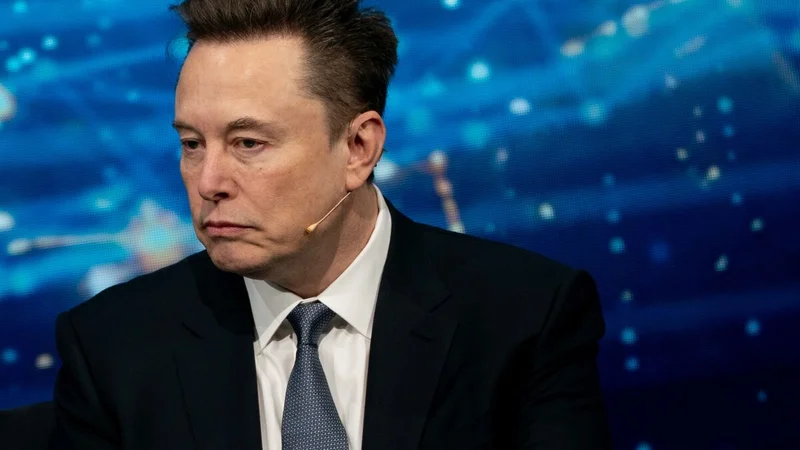
Image: Bloomberg AI
Main Takeaway
Elon Musk's team is pushing semiconductor equipment giants Applied Materials, Tokyo Electron and Lam Research for immediate quotes on the ambitious.
Jump to Key PointsSummary
The Terafab vision emerges
Elon Musk's latest moonshot isn't another rocket or robot—it's a $20 billion semiconductor megafab called Terafab that aims to produce everything from AI chips to space-hardened processors under one roof. According to Tomshardware and Datacenterdynamics, the facility will be built adjacent to Tesla's Austin headquarters as a joint venture between Tesla and SpaceX. Musk describes it as "the most epic chip-building exercise in history by far," targeting a terawatt of annual compute capacity.
The scope is staggering. Terafab won't just make chips—it'll handle memory production, processor packaging, and specialized semiconductors for both terrestrial AI workloads and orbital data centers. This vertical integration approach mirrors Tesla's strategy of controlling its supply chain, but applied to the notoriously complex semiconductor industry.
The supplier scramble begins
Musk's lieutenants aren't asking nicely—they're demanding immediate action. Bloomberg AI reports that teams from the Tesla-SpaceX joint venture have contacted Applied Materials, Tokyo Electron, and Lam Research with urgent requests for price quotes and delivery timelines. The message to suppliers is crystal clear: respond at "light speed" or risk missing out on what could be the largest chip manufacturing effort ever attempted.
This isn't standard industry practice. Semiconductor equipment orders typically involve months of negotiation and careful capacity planning. Instead, Musk's team is treating chipmaking gear like it's a same-day Amazon delivery. The approach reflects both the urgency of AI chip demand and Musk's characteristic impatience with traditional timelines.
Samsung Electronics has also been approached as a potential manufacturing partner, according to Marketscreener. The Korean giant's involvement would provide crucial expertise in advanced process nodes, though it's unclear if they'll serve as a technology transfer partner or actual fab operator.
Why chip giants should be nervous
The Terafab project threatens to disrupt the delicate balance of the $600 billion semiconductor industry. Currently, companies like Nvidia, AMD, and Qualcomm depend on TSMC and Samsung for advanced chips. Musk's entry could create a new vertically integrated competitor with unprecedented scale.
Applied Materials, Tokyo Electron, and Lam Research face a strategic dilemma. These equipment makers typically serve established players like Intel and TSMC. Prioritizing Terafab could strain relationships with existing customers, yet the project's scale makes it impossible to ignore. Digitimes notes that AI demand is already pushing the industry toward supply constraints—adding a terawatt-scale fab will only intensify competition for limited equipment capacity.
The timing is particularly awkward for Nvidia, which currently supplies Tesla's AI training chips. A successful Terafab could eventually make Tesla self-sufficient in AI silicon, directly challenging Nvidia's data center dominance. Similarly, AMD's growing automotive chip business could face new competition from a vertically integrated Tesla.
Technical challenges ahead
Building a leading-edge fab isn't like assembling a car factory. The semiconductor industry has spent decades refining incredibly complex processes that push the boundaries of physics. Tomshardware's coverage highlights that Terafab aims to manufacture at process nodes that took TSMC and Samsung years to perfect.
The project faces three major hurdles. First, talent acquisition: experienced fab engineers are scarce and expensive. Second, process development: even with Samsung's help, developing reliable yields at 3nm or smaller nodes typically takes 2-3 years. Third, equipment lead times: extreme ultraviolet (EUV) lithography machines from ASML have 12-18 month delivery timelines, regardless of Musk's urgency.
Yet Musk has a track record of achieving the impossible through sheer force of will and capital. SpaceX's reusable rockets and Tesla's gigafactories both faced similar skepticism before succeeding. The difference here is that semiconductor manufacturing has less room for iteration—chips either work perfectly or they're worthless.
The $20B question
Financing a $20 billion fab would strain even Tesla's balance sheet. The company currently holds about $29 billion in cash and equivalents, but ongoing gigafactory expansions and new product development compete for those resources. SpaceX's $180 billion valuation could provide additional funding through equity or debt raises.
The broader economic context makes this timing either brilliant or reckless. AI chip demand is surging, but recession fears and rising interest rates make massive capital projects riskier. Forbes AI's reporting suggests the actual cost could reach $25 billion when including supporting infrastructure and initial inventory.
Unlike traditional fabs that serve multiple customers, Terafab appears designed primarily for Tesla and SpaceX's internal needs. This captive model reduces market risk but requires massive internal demand to justify the investment. Tesla's planned robotaxi fleet and SpaceX's Starlink expansion could provide the necessary scale, assuming both projects succeed on schedule.
What happens next
The next 90 days will determine Terafab's viability. Suppliers must decide whether to prioritize Musk's urgent requests over established customers. Samsung's response could establish whether this becomes a technology partnership or competitive threat. Most critically, Musk's team needs to secure both EUV equipment and experienced fab engineers before competitors lock up available capacity.
Success would create the first vertically integrated AI company capable of designing chips, manufacturing them, and deploying them at scale. Failure would join Musk's growing list of ambitious projects that proved technically possible but economically impractical. Either way, the semiconductor industry's carefully orchestrated supply chains just got a very loud wake-up call.
Key Points
Musk's Terafab is a $20-25 billion Tesla-SpaceX joint venture aiming for terawatt-scale chip production in Austin, Texas
Equipment suppliers Applied Materials, Tokyo Electron and Lam Research received urgent requests for immediate quotes and delivery timelines
The facility will manufacture AI chips, space-hardened processors, and memory under one roof for internal Tesla/SpaceX use
Samsung approached as potential manufacturing partner for advanced process technology transfer
Project faces 12-18 month EUV equipment delays and severe talent shortages in experienced fab engineers
Questions Answered
Terafab is Elon Musk's proposed $20 billion semiconductor manufacturing facility that will produce AI chips, space-hardened processors, and memory as a joint venture between Tesla and SpaceX in Austin, Texas.
Musk's team has contacted Applied Materials, Tokyo Electron, and Lam Research—all major semiconductor equipment manufacturers—demanding immediate price quotes and delivery timelines.
Terafab could reduce Tesla's dependence on Nvidia for AI chips and create new competition for established foundries like TSMC, while straining equipment suppliers' relationships with existing customers.
While no official timeline exists, Musk's "light speed" demands suggest immediate supplier commitments are needed, though actual chip production likely remains 2-3 years away due to equipment lead times and process development.
The facility will be built adjacent to Tesla's existing headquarters in eastern Travis County, leveraging existing infrastructure and Tesla's manufacturing expertise in the region.
Funding will likely come from Tesla's $29 billion cash reserves, SpaceX's $180 billion valuation through equity or debt raises, and potentially external investors given the $20-25 billion total project cost.
Source Reliability
42% of sources are trusted · Avg reliability: 62
Go deeper with Organic Intel
Simple AI systems for your life, work, and business. Each one includes copyable prompts, guides, and downloadable resources.
Explore Systems