LinkedIn rolls out a ‘seems like AI slop’ button and kills its own AI writing tool
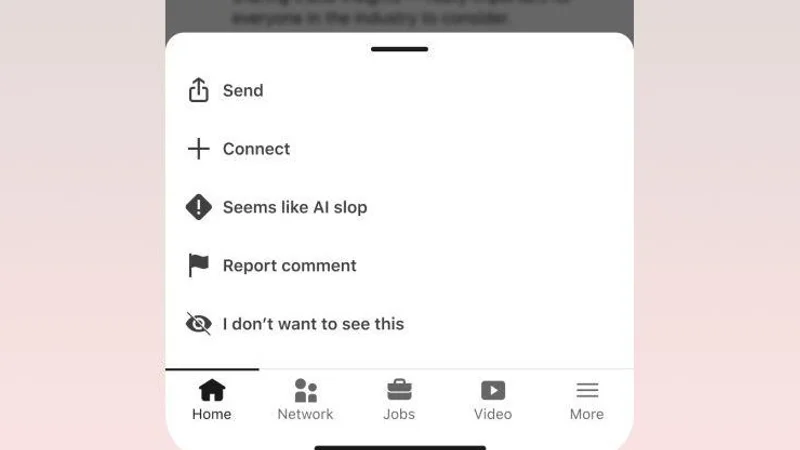
Image: The Verge AI
Main Takeaway
LinkedIn adds a user-facing flag for AI-generated posts and scraps its AI enhance feature, pivoting to a proofreading tool as 41% of longform posts are flagged as entirely AI-written.
Jump to Key PointsSummary
The new flag and what it does
LinkedIn users now see a “Seems like AI slop” option in the three-dot menu on posts. Tapping it hides the post immediately and logs the feedback. The company’s chief product officer, Hari Srinivasan, framed the button as a direct signal source. The goal is to tune LinkedIn’s models and surface better feeds for everyone.
The button is not a take-down mechanism on its own. It feeds classifiers that LinkedIn is building to detect AI slop and generic low-quality material. Those classifiers will suppress flagged content in suggested feeds and recommendations from outside a user’s network. The Verge confirmed the button is live, noting the instant hide-and-thank-you flow when a post gets reported.
Why LinkedIn is making this move now
LinkedIn is reacting to a measurable flood. AI detector Pangram found that 41 percent of long-form LinkedIn posts were entirely AI-generated, as reported by 404 Media. The platform is not alone. Substack recently launched a tool with Pangram to show readers when newsletters are AI-written. Digg shut down its Reddit competitor in March, blaming an unmanageable bot influx.
Cloudflare data shows bot traffic has overtaken human web requests, a milestone reached faster than predicted. LinkedIn says it already blocks hundreds of thousands of automated comment attempts daily and millions of other automation attempts in recent months. The new button is the user-facing layer on top of those automated defenses.
A strategic retreat from AI writing assistance
LinkedIn is removing its own AI “enhance” feature that rewrote user posts. Srinivasan said it will be replaced by a tool that proofreads without altering the writer’s voice. The old tool was designed to polish drafts but ended up contributing to the sameness users now complain about.
The shift is a quiet admission that platform-built generative tools can worsen the problem they later have to clean up. By stripping back to a proofreader, LinkedIn signals that it wants to help people write clearly without generating synthetic voice. It is a move from generation to correction, and it aligns with the broader push to surface authentic human perspective over machine fluency.
The wider industry crackdown on AI content
The LinkedIn changes are part of a larger correction across publishing platforms. Pangram, the AI detection firm that surfaced the 41 percent statistic, announced $9 million in new funding this week to tackle AI content flooding the internet. Substack’s partnership with Pangram gives readers a transparency layer on newsletters. The problem is no longer theoretical for platforms that depend on user trust.
Cloudflare’s data on bot traffic crossing the human threshold underscores the scale. LinkedIn’s product chief called AI slop a top priority and said the company “really cares about this.” The combination of user reporting, automated classifiers, and a pullback on AI writing tools suggests LinkedIn is trying to preserve its value as a professional network where real perspectives matter.
How the feedback loop will work
Srinivasan explained that the report button feeds into LinkedIn’s classifiers. When enough users flag a post as AI slop, the system learns to deprioritize similar content. The company is also testing private signals that will show users when others feel their posts come across as inauthentic or heavily AI-generated.
This creates a reputation layer that sits behind the scenes. A user might see a dashboard notification that their content is perceived as inauthentic, without a public penalty. The idea is to nudge behavior rather than punish it. The classifiers will also act on content before it ever reaches a wide audience, reducing slop in suggested feeds from outside a user’s immediate network.
What happens next for LinkedIn users
The button is already rolling out. Users who see it can flag posts and will get immediate feedback that the post is hidden. The proofreading replacement for the enhance tool is in the pipeline. LinkedIn is betting that a combination of user flags, automated detection, and a stripped-back writing assistant will clean up the feed without making the platform feel hostile to casual posting.
The risk is that false flags could suppress legitimate content. LinkedIn has not detailed an appeal process for posters who get caught in the classifiers. The company is also not sharing specific thresholds for when flagged content gets demoted. The next few months will show whether the signal from user reports is clean enough to train models without over-censoring.
Key Points
LinkedIn added a "Seems like AI slop" button in the three-dot menu to let users flag posts that appear AI-generated.
The company is removing its AI "enhance" writing feature and replacing it with a voice-preserving proofreading tool.
New classifiers will reduce AI slop in recommended content and feeds from outside a user's network.
LinkedIn blocks hundreds of thousands of automated comment attempts daily and millions of broader automation attempts.
The platform will privately notify users when others perceive their posts as inauthentic or heavily AI-generated.
Questions Answered
It is a reporting option in the three-dot menu on LinkedIn posts that lets users flag content appearing to be written by AI. When clicked, the post is hidden and LinkedIn uses the feedback to train its detection models.
LinkedIn is removing the AI enhance tool because it rewrote posts in ways that contributed to the synthetic, inauthentic style users complain about. It will be replaced by a proofreading tool that corrects errors without changing the writer's voice.
AI detector Pangram found that 41 percent of long-form LinkedIn posts were entirely AI-generated, according to 404 Media. LinkedIn also blocks hundreds of thousands of automated comment attempts daily.
The post is hidden from your view immediately and LinkedIn shows a thank-you message. The report feeds into the platform's classifiers, which reduce the visibility of similar content in recommended feeds and content from outside your network.
Yes, LinkedIn is testing a feature that privately notifies users in their dashboards when others perceive their posts as inauthentic or heavily AI-generated, without applying a public penalty.
Source Reliability
67% of sources are highly trusted · Avg reliability: 80
Go deeper with Organic Intel
Simple AI systems for your life, work, and business. Each one includes copyable prompts, guides, and downloadable resources.
Explore Systems