Jill Lepore Warns Silicon Valley Misreads Sci-Fi While Building an Artificial State
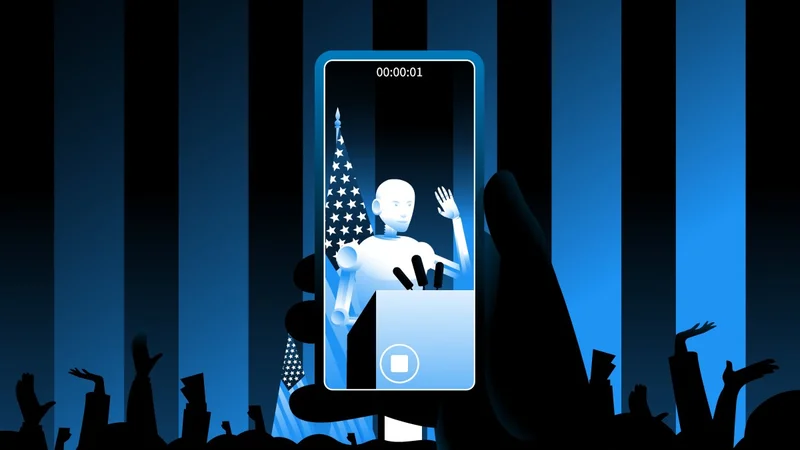
Image: TechCrunch AI
Main Takeaway
Harvard historian Jill Lepore argues in her new book that tech leaders mistake technological advancement for political progress and misread dystopian science fiction as instruction manuals.
Jump to Key PointsSummary
The Artificial State Thesis
Jill Lepore's forthcoming book "The Rise and Fall of the Artificial State" argues that technology companies have gradually assumed the functions of democratic government without accountability. According to TechCrunch, Lepore describes this shift as "a return to tyranny and mystification in the form of rule by algorithms, corporations, machines." The Harvard historian and New Yorker staff writer contends that platforms like Twitter and Facebook have displaced public discourse and local news, creating governance structures that mimic state power but lack democratic legitimacy. Her analysis draws on Hannah Arendt's "The Origins of Totalitarianism" to frame how measurement and datafication flatten human concerns into artificial constructs.
The book positions this transformation as neither inevitable nor progressive. Penguin's description notes that "the future envisioned by the architects of the Artificial State looked, chillingly, like the very worst of the past." Lepore traces how political campaigns have become attention-mining algorithms and multinational corporations control public discourse, suggesting the liberal nation-state is being replaced by rule through artificial intelligence. The Verge's interview with Lepore emphasizes that systemic measurement itself is a dehumanizing act that touches everything from apps to politics.
Lepore insists she is not anti-technologist. As quoted in TechCrunch's Equity podcast, she states: "My beef is the ways in which technology is deployed to undermine democratic self-governance." This distinction frames her critique as targeting power structures rather than innovation itself.
Silicon Valley's Terminator Problem
Lepore identifies a specific cultural blind spot among tech leaders: they misread dystopian science fiction as roadmaps rather than warnings. News.yale reports that Lepore, speaking at the Tanner Lectures, traced this to "The Terminator" (1984), which "seized the imaginations of the future rulers of Silicon Valley." She notes Elon Musk was 13 when the film released and later warned in 2023 that "people must worry about a Terminator future to avoid a Terminator future." This framing reveals a fundamental confusion: treating cinematic catastrophe as strategic foresight.
The Verge's Decoder interview captures this dynamic with the observation: "They went and built the Torment Nexus", a reference to a sci-fi trope where creators build the very thing fiction warned against. Lepore argues that tech titans like Musk, Peter Thiel, and Sam Altman internalized apocalyptic narratives as inevitable destinies rather than cautionary tales. This misreading shapes how they build systems: if the Terminator future is unavoidable, the rational move is to build the Terminator first.
TechCrunch's coverage adds that this sci-fi illiteracy extends beyond Terminator scenarios. Leaders mistake technological advancement for political progress, confusing scale with legitimacy. The language of "town halls" and "constitutions" for platforms reveals a category error: corporate governance dressed in democratic vocabulary.
Constitutional AI and Corporate Governance
The Anthropic "Claude Constitution" exemplifies Lepore's critique of corporate constitutionalism. TechCrunch's earlier article cites this as a prime example of companies adopting governmental language, "almost as if they're forming a new government." Lepore argues these documents mimic democratic constitutions while lacking popular sovereignty, separation of powers, or accountability mechanisms. They are terms of service dressed in philosophical language.
This pattern appears across the industry. Twitter's old "town hall in your pocket" framing, Facebook's "oversight board" modeled on supreme courts, and various AI ethics boards all borrow institutional forms without democratic substance. The Verge notes Lepore's insight that these artificial structures touch everything "all the way up to politics and governance itself." Corporate constitutions serve branding and regulatory positioning rather than genuine power-sharing.
The Free Library Foundation event description connects this to Arendt's warning that "the machinery of modern life was reshaping the very fundamentals of human existence." Lepore updates this for an era where the machinery is algorithmic and the reshaping occurs at the level of attention, discourse, and decision-making.
Measurement as Dehumanization
A central thread in Lepore's argument concerns quantification itself. The Verge's interview highlights her thesis that "systemic measurement is really a dehumanizing act, one that flattens human concerns into something, well, artificial." This applies beyond AI to the entire datafication pipeline: gathering information, quantifying it as data, and taking action on it. Each step strips context and reduces complexity.
This flattening enables the artificial state's governance model. When human needs become data points, algorithmic optimization replaces political deliberation. Penguin's summary notes that "power is maintained through mystification: machines, we are told, know what humans cannot." The authority of the artificial state rests on epistemic claims, that systems see patterns humans miss, rather than democratic consent.
Lepore's Pulitzer-winning work on the U.S. Constitution informs this critique. She understands constitutionalism as a practice of collective self-governance, not a branding exercise. The artificial state mimics constitutional forms while hollowing out their substance, replacing "we the people" with "we the users" and rights with terms of service.
Historical Parallels and Arendt's Shadow
Lepore explicitly draws on Hannah Arendt's "The Origins of Totalitarianism" (1951) as an intellectual framework. The Free Library Foundation event describes her book as "inspired by" Arendt's argument that "the machinery of modern life was reshaping the very fundamentals of human existence." Lepore updates this for digital infrastructure: the machinery is now algorithmic, the reshaping is global, and the totalitarian temptation wears a hoodie.
Arendt analyzed how bureaucratic systems could produce evil without evil intent, through thoughtlessness and systemic inertia. Lepore applies this to platforms where content moderation, recommendation algorithms, and automated decision-making create outcomes no individual chose. The artificial state emerges not from a master plan but from the accumulation of optimization decisions.
This historical lens distinguishes Lepore's critique from typical tech criticism. She does not argue that tech leaders are villains, but that they are bad readers of history and fiction alike. They build systems that structurally undermine democracy while believing they advance progress. The Terminator misreading is symptomatic: they cannot imagine futures outside the scripts they absorbed as adolescents.
What Comes After the Artificial State
The book's title, "The Rise and Fall", implies the artificial state is not permanent. Lepore suggests its collapse may come from its own contradictions: systems that flatten human complexity eventually fail to govern actual humans. The Verge's interview captures her view that "nothing about any of this was, or is, inevitable." The artificial state is a historical contingency, not a technological destiny.
Recovery requires reclaiming democratic language from corporate mimicry. Constitutions belong to peoples, not platforms. Town halls require physical presence and political equality, not engagement metrics. Lepore's work aims to restore the conceptual tools for distinguishing governance from management, citizens from users, and progress from scale.
The stakes extend beyond Silicon Valley. As Penguin notes, "the era of the liberal nation-state seems to be coming to an end, replaced by the rule of artificial intelligence." Lepore's intervention is a historian's attempt to make that replacement visible, contestable, and reversible. The fall of the artificial state begins with recognizing it exists.
Key Points
Jill Lepore argues tech companies now perform governmental functions without democratic accountability
Silicon Valley leaders misread dystopian sci-fi like The Terminator as roadmaps not warnings
Corporate constitutions mimic democratic forms but lack popular sovereignty or separation of powers
Algorithmic measurement flattens human complexity into data enabling rule by optimization
Lepore draws on Hannah Arendt to show the artificial state emerges from systemic inertia not master plans
Questions Answered
Jill Lepore argues that technology companies have gradually assumed the functions of democratic government — controlling discourse, shaping elections, governing attention — without democratic accountability or legitimacy. She describes this as a return to tyranny through rule by algorithms and corporations rather than popular sovereignty.
Lepore contends tech leaders like Elon Musk internalized dystopian narratives such as The Terminator as inevitable destinies rather than cautionary tales. They treat cinematic catastrophe as strategic foresight, building the very systems fiction warned against while believing they prevent the outcomes they accelerate.
Corporate constitutionalism refers to companies adopting governmental language and structures — like Anthropic's Claude Constitution or Twitter's 'town hall' framing — that mimic democratic forms such as constitutions and oversight boards while lacking popular sovereignty, separation of powers, or genuine accountability to users.
Lepore draws on Arendt's The Origins of Totalitarianism, which argued modern machinery reshapes human existence. She updates this for algorithmic infrastructure: systems produce outcomes no individual chose through optimization decisions, creating an artificial state that emerges from structural inertia rather than deliberate design.
No. Lepore explicitly states that 'nothing about any of this was, or is, inevitable.' The book's title — The Rise and Fall — signals her view that the artificial state is a historical contingency with internal contradictions that may lead to its collapse, and she aims to provide conceptual tools for democratic recovery.
Source Reliability
67% of sources are established · Avg reliability: 68
Go deeper with Organic Intel
Simple AI systems for your life, work, and business. Each one includes copyable prompts, guides, and downloadable resources.
Explore Systems