Google's First New Smart Speaker in Six Years Puts Gemini AI in Every Room for $100
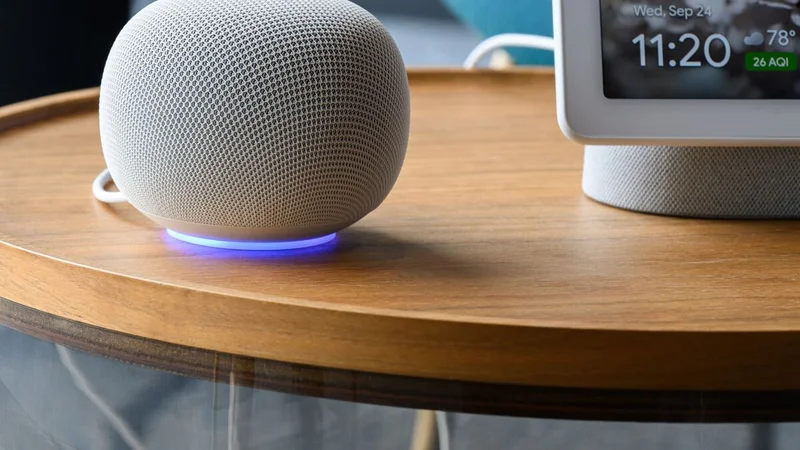
Image: Bloomberg AI
Main Takeaway
Google's $100 Home Speaker launches June 25 with Gemini AI, replacing Google Assistant after six years without a new audio device.
Jump to Key PointsSummary
What changed after six years of silence
Google's last smart speaker arrived before pandemic lockdowns, so the June 25 launch of its $100 Home Speaker ends an unusually long drought. The company announced the device last fall alongside Nest cameras and doorbells, initially targeting spring 2026 but slipping into summer. Preorders opened June 17 across four colors: Porcelain, Hazel, Jade, and Berry, though the latter two remain US exclusives.
The hardware itself stayed static since its unveiling nine months ago. It keeps the squashed spherical design, touch-capacitive top controls, and bottom light ring. Audio features include 360-degree sound, stereo pairing, and spatial surround when combined with a Google TV Streamer. The device also functions as a Matter controller and Thread Border Router, positioning it as a smart home hub rather than merely a speaker.
Why Gemini for Home replaces the old assistant
The Google Home Speaker marks the first audio hardware built specifically for Gemini for Home, Google's new conversational AI assistant. While Gemini for Home reached existing Nest speakers through an early access program, chief product officer Anish Kattukaran stated this device delivers the optimal experience. The speaker runs local models for noise cancellation, echo suppression, and sound separation so Gemini catches commands despite background interference.
Users trigger Gemini with the familiar "Hey, Google" wake phrase, but the underlying intelligence differs sharply from its predecessor. The system handles interrupted queries, allowing users to stop mid-sentence and rephrase without repeating the wake word. It also processes chained commands in single utterances and tolerates more natural, less rigid phrasing. These improvements address longstanding friction points that made the original Google Assistant feel transactional compared to human conversation.
What the subscription wall looks like
Some features require a Google Home Premium subscription_skip_subscription_details_unclear_from_sources, indicating Google's continued push toward recurring revenue for advanced AI capabilities. This mirrors broader industry patterns where hardware margins thin while software subscriptions generate sustained income. The base $100 price undercuts Apple's HomePod and competes directly with Amazon's Echo lineup, but the total cost of ownership may climb for users wanting full functionality.
The subscription requirement also signals a strategic pivot. Google previously bundled assistant features freely; now it segments basic voice control from premium AI services. This approach tests consumer willingness to pay monthly for smarter home automation, with implications for how competitors price their own AI enhancements.
How this shifts the smart speaker market
Amazon's Echo devices dominated the category during Google's six-year hiatus, while Apple pursued-cemented premium positioning with HomePod. Google's return with Gemini integration attempts to leapfrog both through superior natural language understanding rather than audio quality or ecosystem lock-in alone. The 360-degree sound and stereo pairing match table-stakes expectations, but conversational AI serves as the differentiator.
Analysts will watch whether Gemini's contextual awareness overcomes consumer inertia. Smart speaker adoption plateaued as functionality stagnated; Google's bet is that genuinely conversational AI reignites upgrade cycles. The Matter and Thread support additionally future-proofs the device as smart home standards consolidate, reducing the risk of obsolescence that plagued earlier Google hardware efforts.
What happens next for Google hardware
The Home Speaker launches into a market more skeptical of ambient computing than in 2020. Privacy concerns metastasized, and voice assistant novelty faded. Google's response, loading Gemini's multimodal capabilities into a domestic form factor, represents a test of whether large language model advances translate to daily utility. Early reviews will focus on latency, accuracy, and whether the local processing Kattukaran emphasized delivers consistent performance.
Success here likely determines Google's broader hardware roadmap. The company cancelled its Pixel Tablet follow-up and pared back Nest ambitions; a hit speaker could justify renewed investment. Failure risks ceding the living room to Amazon and Apple permanently. For now, the June 25 ship date gives Google a narrow window to capture holiday 2026 shopping before competitors respond with their own AI-native devices.
Key Points
Google launches first new smart speaker in six years for $100 on June 25
Gemini for Home replaces Google Assistant with conversational natural language understanding
Device includes 360-degree sound, Matter controller, and Thread Border Router capabilities
Some advanced features require Google Home Premium subscription for full access
Four color options with Jade and Berry restricted to US market only
Questions Answered
The Google Home Speaker costs $100 and officially goes on sale June 25, with preorders opening June 17. The device ships June 29 for most orders placed at launch.
The Google Home Speaker is the first audio device designed specifically for Gemini for Home, replacing the older Google Assistant. It processes natural conversation more fluidly, handles interrupted queries, and runs local AI models for better voice recognition in noisy environments.
Basic voice control works without payment, but some Gemini for Home features require a Google Home Premium subscription. Google has not fully detailed which capabilities sit behind the paywall.
The speaker comes in Porcelain, Hazel, Jade, and Berry. Jade and Berry are exclusive to the US market, while Porcelain and Hazel have wider international availability.
Yes, the device functions as both a Matter controller and Thread Border Router, enabling it to manage compatible smart home accessories across different ecosystems and brands.
Source Reliability
46% of sources are highly trusted · Avg reliability: 79
Go deeper with Organic Intel
Simple AI systems for your life, work, and business. Each one includes copyable prompts, guides, and downloadable resources.
Explore Systems