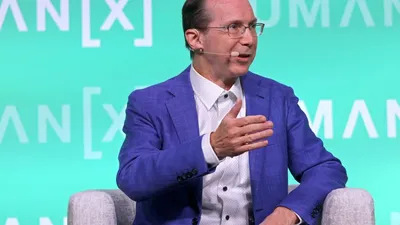
ElevenLabs CEO Targets 2028 IPO Preparation as Voice AI Startup Expands Worldwide
Main Takeaway
ElevenLabs CEO Mati Staniszewski said the voice AI company would like to begin IPO preparations in 2028 while pursuing global expansion and stronger margins.
Jump to Key PointsSummary
ElevenLabs sets a public-market ambition
ElevenLabs CEO and co-founder Mati Staniszewski said the voice AI startup would like to pursue a public listing, with 2028 identified as a good target for beginning IPO preparation. He described an IPO as a means to support the company’s development rather than an objective by itself, according to Bloomberg’s interview coverage.
The comments place ElevenLabs among a group of highly valued AI companies weighing public-market access after building substantial private-market momentum. They also give investors and employees a clearer time frame, while stopping short of announcing a filing, exchange, valuation target, or formal underwriting process. Bloomberg’s video coverage characterized Staniszewski’s position more broadly as a desire to IPO in the future, while the company’s timing remains aspirational.
Expansion comes before an offering
ElevenLabs is pairing its IPO ambition with international expansion. CNBC’s coverage framed the company’s next phase around global growth and an eventual listing, indicating that management sees scale across markets as part of the preparation for a public company.
The business has drawn attention because synthetic voice technology serves several markets at once, including media, customer service, accessibility, gaming, and AI agents. Finance Yahoo’s headline also highlights margins and customer disclosure, two issues that matter as ElevenLabs moves from startup growth toward public-company scrutiny. Revenue growth alone will not define the offering story; investors will examine recurring demand, infrastructure costs, gross margins, and how clearly users understand when they are interacting with a bot.
Voice AI enters a tougher test
ElevenLabs’ public-market case will depend on whether voice generation becomes durable infrastructure rather than a novelty layer. Its technology sits inside products that need natural speech, fast response times, multilingual support, and reliable moderation, making operating performance as important as audio quality.
AI agents give the company a broader commercial opening because voice can become the interface for automated customer interactions and software assistants. That opportunity also brings higher expectations around consent, identity, impersonation, disclosure, and abuse controls. Finance Yahoo’s focus on telling customers they are speaking with a bot points to a practical trust issue that could affect adoption and regulation. The company’s eventual prospectus would need to explain how it handles those concerns while sustaining growth.
Private valuation shapes expectations
Private-market interest has already made ElevenLabs’ equity a subject of investor attention. EquityZen and ForgeGlobal both frame the company around pre-IPO shares and private stock pricing, while a Note commentary discusses a reported $22 billion valuation and questions whether investor positioning has advanced faster than the underlying product.
Those perspectives show how an IPO conversation can influence the company before a filing exists. Employees and private shareholders may gain a clearer route to liquidity, while prospective investors will compare any public valuation with private transactions and secondary-market prices. A high private valuation also raises the performance bar: ElevenLabs would need to show that revenue, margins, customer retention, and product breadth can justify expectations built during private financing.
What public investors will watch
The central test for ElevenLabs will be the conversion of voice AI demand into predictable, profitable growth. Margins will receive close attention because speech generation requires substantial computing capacity, and agent deployments can produce heavy usage at uneven prices.
Public investors will also evaluate customer concentration, competition, enterprise contracts, international expansion costs, and the share of revenue tied to developers versus large organizations. Wikipedia provides general company background, while IPO-focused services and private-market platforms show that market participants are already tracking ownership and listing questions. None of those signals represents a filed offering, so the 2028 objective remains a management target rather than a scheduled transaction.
The road to 2028
ElevenLabs now has a stated direction: expand internationally, improve the economics of its voice business, build trust around AI interactions, and prepare for public markets if conditions support it. Staniszewski’s comments make 2028 the earliest named preparation milestone in the coverage, not a confirmed IPO date.
The next meaningful signals will come from financing activity, audited financial disclosures, executive hiring, governance changes, and evidence that enterprise and agent customers are producing durable revenue. IPO conditions will also matter, but the company’s internal readiness will determine whether the ambition becomes a filing. For now, ElevenLabs is treating public ownership as a tool for the next stage of growth, with voice AI’s commercial performance set to decide how credible that path becomes.
Key Points
ElevenLabs CEO Mati Staniszewski identified 2028 as a target for beginning IPO preparation.
ElevenLabs is linking global expansion with its eventual public-market ambitions.
Voice AI margins will face scrutiny because speech generation requires substantial computing capacity.
AI agents expand ElevenLabs’ market while raising disclosure, consent, and impersonation concerns.
Private-market platforms are tracking ElevenLabs shares amid attention around its reported valuation.
Questions Answered
ElevenLabs CEO Mati Staniszewski identified 2028 as a good goal for starting IPO preparation. The company has not announced a filing date, exchange, or completed offering.
ElevenLabs is not confirmed to be going public now. Mati Staniszewski said the company would like to IPO in the future, with 2028 discussed as a preparation milestone.
ElevenLabs views an IPO as a way to support its next stage of growth rather than as an end in itself. The company is expanding globally and building its voice AI business for developers, enterprises, and AI agents.
ElevenLabs investors will examine margins, recurring revenue, computing costs, customer retention, international expansion, and AI interaction disclosure. Trust, consent, impersonation, and customer concentration will also matter.
Private investors are tracking ElevenLabs through secondary-market and pre-IPO platforms such as ForgeGlobal and EquityZen. Those listings indicate market interest, but they do not confirm an IPO or establish a final public valuation.
Source Reliability
38% of sources are established · Avg reliability: 64
Go deeper with Organic Intel
Simple AI systems for your life, work, and business. Each one includes copyable prompts, guides, and downloadable resources.
Explore Systems