Commencement Speakers Face Backlash for AI Enthusiasm as Graduates Boo Eric Schmidt and Gloria Caulfield
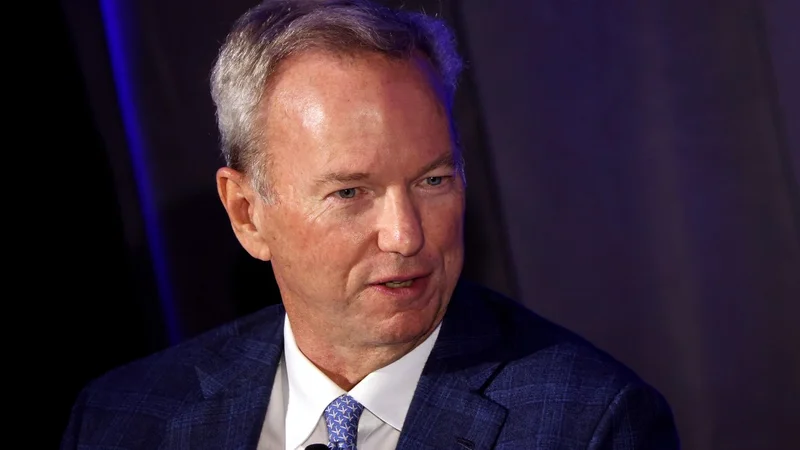
Image: The Verge AI
Main Takeaway
Graduating students at multiple U.S. universities booed commencement speakers who praised AI, signaling deep generational anxiety about automation, job.
Jump to Key PointsSummary
Why graduates are rejecting AI optimism
Commencement season in 2026 has exposed a stark disconnect between Silicon Valley's AI enthusiasm and the anxieties of young people entering the workforce. At the University of Arizona, former Google CEO Eric Schmidt was met with sustained booing as his commencement address turned to artificial intelligence, according to The Verge and Business Insider. Schmidt attempted to acknowledge student fears, noting concerns that "the machines are coming, that the jobs are evaporating, that the climate is breaking, that politics are fractured, and that you are inheriting a mess that you did not create." But the crowd's reaction only intensified, forcing Schmidt to visibly squirm behind the podium and plead with the audience to let him continue.
The Arizona incident was not isolated. At the University of Central Florida, Gloria Caulfield, an executive at real estate firm Tavistock Development Company, faced similar booing when she described AI as "the next industrial revolution," TechCrunch reports. Caulfield initially tried to laugh off the reaction, asking fellow speakers "What happened?" before attempting to continue. The pattern suggests something more than rudeness or political theater. It points to a generation that experiences AI not as abstract technological progress but as a direct threat to economic security at the precise moment they are most vulnerable: graduation.
What this signals about the labor market
The commencement backlash arrives as economists and labor researchers debate the pace and distribution of AI-driven job displacement. Schmidt's own acknowledgment that "jobs are evaporating" was striking given his decades promoting technological optimism from Google's top ranks. The students booing him are entering a job market where entry-level positions in media, customer service, software, and law have already contracted as companies deploy generative AI tools. According to The Verge, Schmidt characterized student fears as "rational," a notable concession from someone who spent years dismissing AI anxiety as overblown.
The timing matters. Graduation ceremonies are ritualized transitions into adulthood and economic independence. When speakers use this moment to celebrate AI, they are perceived as celebrating the very force that may foreclose that transition. Caulfield's framing of AI as "exciting" and "daunting" simultaneously, reported by TechCrunch, likely amplified the sense that elites view disruption as an intellectual puzzle rather than a lived crisis. The students' response suggests they no longer accept the framing that technological progress benefits everyone eventually, if not immediately.
How Silicon Valley misread the room
The disconnect between tech leaders and young audiences has been building for years, but the commencement incidents reveal how complete the rupture has become. Schmidt is not a marginal figure; as Google's CEO from 2001 to 2011 and a persistent AI evangelist, he represents the establishment view that technological advancement should be welcomed and accelerated. That this view now provokes open contempt at a public university suggests the social license for unchecked AI development has eroded faster than many anticipated. Business Insider's coverage emphasized Schmidt's visible frustration, noting he was "repeatedly drowned out" despite his status as a major donor and technology statesman.
The misreading appears structural. Tech leaders have spent years in environments, venture capital meetings, and policy conferences where AI optimism is the default social currency. They have had limited exposure to constituencies for whom AI means resume rejections, gig-economy precarity, or the degradation of professional crafts. KOLD's reporting on mixed graduate reactions, while limited in detail, suggests the Arizona audience was not uniformly opposed, some students supported the speech or remained silent. But the vocal minority was loud enough to dominate the event, a pattern that public speakers will likely note. The lesson for 2027 commencement planners is already clear: AI enthusiasm plays poorly with audiences facing immediate economic precarity.
What happens next for public AI discourse
The commencement incidents will likely accelerate a shift already underway in how AI is discussed in non-technical settings. Speakers who might have led with AI's transformative potential will now be counseled to acknowledge displacement first, or avoid the topic entirely. This could produce a bifurcated discourse where AI is celebrated in investor calls and technical conferences but treated cautiously in any context involving general audiences or economic vulnerability. The Verge's framing, that "Silicon Valley can't seem to read the room," captures a growing media narrative that treats tech boosterism as politically and socially tone-deaf.
For AI companies and their advocates, the challenge is now explicit. The default assumption among young, educated audiences appears to be skepticism or hostility, not curiosity or hope. This complicates recruitment, policy advocacy, and consumer product launches that depend on broad social acceptance. The University of Arizona student groups that reportedly organized opposition, mentioned in Tucson coverage, suggest the backlash was not entirely spontaneous but reflected organized sentiment. If such organizing spreads, AI firms may face not just regulatory scrutiny but a generation of workers and consumers who view their products with active distrust from career entry onward.
The broader context of tech backlash
These commencement protests fit within a larger pattern of public resistance to Silicon Valley's cultural authority. From the tech-lash of the late 2010s against Facebook and Google's data practices to recent skepticism of cryptocurrency and metaverse hype, American audiences have grown increasingly willing to express open contempt for technologies and their promoters. AI differs in scale and potential impact, but the dynamic is familiar: a technology promoted as universally beneficial encounters specific constituencies who experience it as harm. The graduation setting makes this especially visible because it forces a confrontation between the promise of technological progress and the reality of economic distribution.
What distinguishes the 2026 commencement season is the immediacy of the economic threat. Previous tech backlashes often targeted abstract concerns, privacy, monopoly power, misinformation. The booing of Schmidt and Caulfield targeted something more concrete: the fear that the speakers' own careers and wealth were built on a model that now threatens to make graduates' skills obsolete before they are even employed. This is not a theoretical grievance. It is a claim about who bears the costs of innovation and who captures its benefits. As long as that distribution feels unjust, AI optimism will face hostile audiences, regardless of the speaker's credentials or the technology's genuine capabilities.
What speakers and companies should learn
The practical implications for future public engagement are straightforward but difficult to implement. Companies and their representatives must learn to lead with acknowledgment of harm before celebration of capability, a sequencing that runs counter to decades of tech communications practice. For commencement speakers specifically, the advice emerging from these incidents is almost comically simple: do not mention AI unless prepared to address job displacement, climate anxiety, and political dysfunction as interconnected crises rather than separate footnotes. Schmidt tried this and still failed, suggesting the credibility gap may be too wide for individual speakers to bridge.
For the AI industry, the deeper lesson is about legitimacy. Technologies gain social acceptance not through superior performance alone but through perceived fairness in how costs and benefits are distributed. The graduating class of 2026 has signaled that it does not yet see that fairness, and that no amount of rhetorical framing will persuade it otherwise. Whether this sentiment endures as a political force, or fades as economic conditions shift, will shape AI regulation and adoption for years. For now, the booing at Arizona and Florida represents a rare unscripted moment in public AI discourse, one that speakers and executives would be wise to study rather than dismiss.
Key Points
Former Google CEO Eric Schmidt was repeatedly booed during his University of Arizona commencement speech when he discussed artificial intelligence, forcing him to acknowledge student fears about job displacement as 'rational'
University of Central Florida executive Gloria Caulfield faced similar audience rejection when she described AI as 'the next industrial revolution,' indicating a pattern across multiple institutions
The backlash reflects concrete economic anxiety among graduates entering a job market where entry-level positions in media, customer service, software, and law have already contracted due to AI deployment
Tech leaders appear structurally misaligned with young audiences, having spent years in environments where AI optimism is the default and limited exposure to constituencies experiencing AI as direct economic harm
The incidents suggest AI companies now face a generation of workers and consumers who may view their products with active distrust from career entry, complicating recruitment and policy advocacy
Questions Answered
Students at the University of Arizona booed former Google CEO Eric Schmidt when his commencement address turned to artificial intelligence. According to The Verge and Business Insider, the booing intensified as Schmidt discussed AI, despite his attempt to acknowledge student fears about job displacement and inheriting systemic problems as 'rational.' His status as a prominent AI evangelist and wealthy tech leader appeared to amplify the negative reaction.
No. According to TechCrunch, Gloria Caulfield, an executive at Tavistock Development Company, faced similar booing at the University of Central Florida when she described AI as 'the next industrial revolution.' This suggests a broader pattern of graduating students rejecting AI optimism at commencement ceremonies across different institutions.
Schmidt himself summarized the concerns he heard from students: 'that the machines are coming, that the jobs are evaporating, that the climate is breaking, that politics are fractured, and that you are inheriting a mess that you did not create.' The backlash appears rooted in concrete anxiety about AI-driven job displacement, particularly in entry-level positions in fields like media, customer service, software, and law.
The incidents suggest AI companies and their representatives will need to adjust public messaging to acknowledge economic harm before celebrating technological progress. For future commencement speakers and public events, the practical lesson appears to be avoiding AI topics entirely unless prepared to address displacement, climate anxiety, and political dysfunction as interconnected crises rather than separate issues.
It is too early to know if this represents a lasting political force or a temporary expression of economic anxiety. However, the pattern fits within a larger 'tech-lash' against Silicon Valley cultural authority. What distinguishes the 2026 commencement season is the immediacy of the economic threat and the open contempt shown toward established tech figures, suggesting at minimum that AI optimism now faces hostile audiences in non-technical settings.
Source Reliability
50% of sources are trusted · Avg reliability: 76
Go deeper with Organic Intel
Simple AI systems for your life, work, and business. Each one includes copyable prompts, guides, and downloadable resources.
Explore Systems