Apple Vision Pro Chief Paul Meade Defects to OpenAI Amid Smart Glasses Pivot
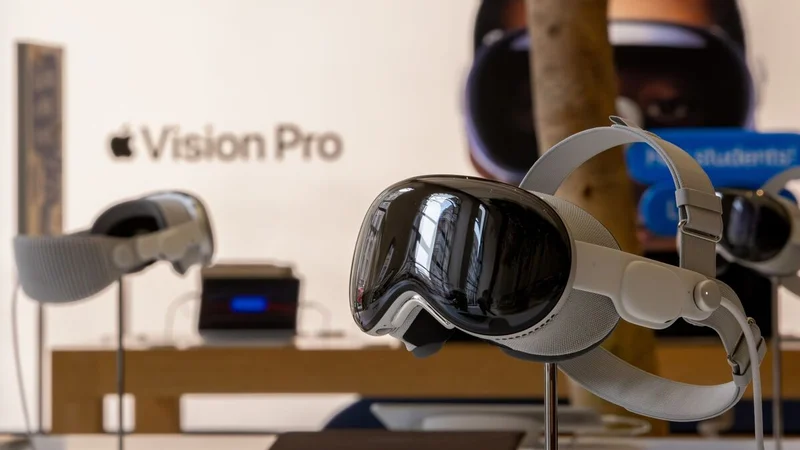
Image: Bloomberg AI
Main Takeaway
Apple VP Paul Meade, who led Vision Pro and smart glasses development, is leaving to join OpenAI's hardware team, Bloomberg reports.
Jump to Key PointsSummary
Why a top Apple hardware exec chose OpenAI
Paul Meade, the Apple vice president who oversaw the Vision Pro headset and the company's smart glasses efforts, is departing Apple to join OpenAI's hardware division. Bloomberg first reported the move, which represents one of the most significant hardware executive transfers from Apple to an AI competitor to date. Meade's exit continues a pattern of high-profile talent migration from established tech giants to well-funded AI startups.
The departure stings particularly because Meade wasn't managing a legacy product. He was shepherding Apple's next-generation wearable computing initiatives. His move signals that experienced hardware veterans now view AI-native companies as the most compelling place to build future devices. OpenAI has been quietly assembling hardware capabilities, and landing a leader with Meade's shipping record gives that effort immediate credibility.
Apple has historically been the destination for talent, not the source. Watching a VP-level hardware lead walk to a company that didn't exist as a consumer brand a decade ago marks a notable reversal.
What Meade actually built at Apple
Meade's responsibilities spanned two distinct product lines with very different fortunes. The Vision Pro, Apple's high-end spatial computing headset, launched in early 2024 to technical acclaim but commercial disappointment. The device demonstrated remarkable engineering, yet its $3,499 price point and limited content ecosystem constrained mainstream adoption. Meade reportedly led that program through its entire development cycle.
More strategically, he also directed Apple's AI-powered smart glasses project, which the company reportedly plans to launch next year. This product line represents Apple's attempt to compete with Meta's Ray-Ban smart glasses and anticipation of whatever augmented reality form factor eventually succeeds smartphones. Bloomberg reported that Apple has shelved plans for a Vision Pro revamp to prioritize these lighter, more consumer-friendly glasses. Meade's exit leaves that pivot without its primary architect just as the product approaches a critical development phase.
OpenAI's hardware ambitions come into focus
OpenAI has been recruiting hardware talent for months, but Meade's hire reveals the scale of its ambitions. The company is no longer content to supply AI models to device makers. It wants to design the devices themselves. This mirrors the strategy that allowed Apple to dominate smartphones by controlling both software and hardware.
Sam Altman has hinted at hardware projects in development, including speculation about AI-first devices that reimagine how users interact with intelligent systems. Meade's expertise in wearable computing, sensor integration, and miniaturization directly applies to any head-mounted or glasses-based product. His experience shipping mass-market consumer electronics at Apple also addresses a gap in OpenAI's existing talent pool, which skews heavily toward research and software engineering.
The hire suggests OpenAI is planning something more ambitious than reference designs or partnerships. Companies don't recruit VP-level hardware executives with Meade's background to advise on white-label products.
Apple's broader talent retention challenge
Meade's departure is not isolated. MacRumors noted it continues a streak of high-profile defections from Apple to AI rivals. The company has faced particular attrition among employees working on machine learning and AI-adjacent projects, as Apple's more cautious approach to generative AI has frustrated some technical staff who see competitors moving faster.
Apple's compensation structure, while generous, struggles to match the equity upside offered by private AI companies at critical growth moments. More fundamentally, some engineers and product leaders question whether Apple's organizational culture, with its secrecy and deliberate pace, can compete with the urgency and openness of AI-focused rivals. The company has responded with selective retention bonuses and accelerated internal AI investments, but the outflow continues.
For hardware specifically, the concern is that AI-native devices may require different design philosophies than Apple's polished, fully-baked product approach allows. Startups can ship experimental hardware, learn from failures, and iterate publicly. Apple's institutional tolerance for that cycle is limited.
What this means for the smart glasses race
Meta currently leads consumer smart glasses through its Ray-Ban partnership, which has sold over two million units and is expanding to include richer AR features. Apple's planned entry, with Meade formerly at the helm, was positioned as a higher-end alternative with deeper AI integration. His removal introduces execution risk into that competitive timeline.
The industry is converging on glasses as the most promising near-term AR form factor, with lighter headsets and eventually contact lenses as longer-term bets. Whoever solves the combination of all-day battery life, acceptable weight, useful AI features, and non-embarrassing aesthetics will capture significant value. Meade's move to OpenAI suggests he believes the winning approach will come from an AI-first company rather than a hardware incumbent.
For consumers, increased competition typically accelerates innovation and reduces prices. For Apple shareholders, it raises questions about whether the company can maintain its historical ability to enter established categories late and still dominate.
What happens next for both companies
Apple must name a replacement for Meade quickly if it intends to maintain its reported smart glasses timeline for next year. Internal candidates likely exist, but the loss of institutional knowledge at this stage is costly. The company may also reconsider its hardware strategy given that its Vision Pro approach underperformed and its glasses leader has departed.
OpenAI gains not just talent but strategic optionality. Meade can evaluate whether to build glasses, headsets, or entirely novel form factors. He can also assess partnerships with existing manufacturers versus vertical integration. The company's next hardware announcements will reveal whether this hire was about catching up to Meta or leapfrogging to something unexpected.
The move also intensifies the personal rivalry between Sam Altman and Mark Zuckerberg, who have traded public comments about AI safety and competitive strategy. Both now have serious hardware ambitions in the same product category.
Key Points
Apple VP Paul Meade, who led Vision Pro and smart glasses development, departs for OpenAI's hardware team.
Meade's exit removes the primary architect of Apple's planned AI smart glasses launching next year.
OpenAI gains veteran hardware leadership as it builds device capabilities beyond AI software models.
Apple faces ongoing talent retention challenges as AI competitors lure technical staff with equity and urgency.
Meta's Ray-Ban smart glasses currently lead the consumer market as Apple and OpenAI intensify competition.
Questions Answered
Paul Meade is an Apple vice president who led the Vision Pro headset and smart glasses programs. His departure to OpenAI is significant because he was overseeing Apple's next-generation wearable computing initiatives, and his move to a key competitor signals OpenAI's serious hardware ambitions.
Meade was reportedly leading development of Apple's AI-powered smart glasses planned for launch next year. His exit introduces execution risk for that product timeline, as Bloomberg reported Apple had already shelved Vision Pro revamp plans to prioritize this glasses initiative.
OpenAI is building its own hardware capabilities to design AI-native devices rather than just supplying models to partners. Meade's expertise in wearable computing, sensor integration, and shipping mass-market consumer electronics directly supports that strategy.
Meta currently leads the consumer smart glasses market through its Ray-Ban partnership, which has sold over two million units. Both Apple and now potentially OpenAI are positioning to challenge that position with competing products.
Yes, Meade's departure continues a streak of high-profile defections from Apple to AI rivals, particularly among machine learning and AI-adjacent staff who are attracted by faster-moving cultures and potentially greater equity upside at private AI companies.
Source Reliability
40% of sources are highly trusted · Avg reliability: 72
Go deeper with Organic Intel
Simple AI systems for your life, work, and business. Each one includes copyable prompts, guides, and downloadable resources.
Explore Systems