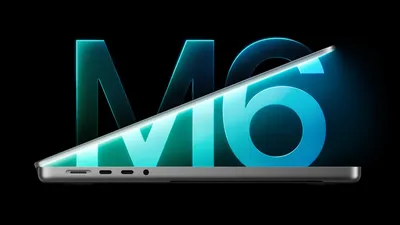
Apple Breaks a 20-Year Rule With Its First Touchscreen MacBook Pro

Main Takeaway
Apple unveiled its first touchscreen MacBook Pro after two decades of resistance, pairing the new input method with a PROLED XDR display and higher prices.
Jump to Key PointsSummary
Apple breaks with Mac tradition
Apple has unveiled its first touchscreen MacBook Pro, ending a design stance associated with Steve Jobs that kept touch input on the iPad rather than the Mac. The move gives Apple's flagship laptop a feature that has become standard across much of the premium PC market, according to Bloomberg and The New York Times.
The announcement marks a major change in the MacBook Pro's product direction. Apple is presenting the device as an overhauled model rather than a minor specification update, while coverage from The Herald Business frames the launch as the end of a 20-year design principle. Apple’s own announcement centers on the new PROLED XDR display, making the screen a central part of the redesign alongside touch input.
A new screen anchors the redesign
The touchscreen arrives with an OLED-based PROLED XDR display, giving the MacBook Pro a brighter and more vivid panel while adding direct interaction to macOS. Bloomberg’s hands-on account describes the display as a first for the lineup and says the machine has also shed a noticeable amount of weight.
Early descriptions emphasize continuity as much as novelty. Users won't need to abandon familiar keyboard and trackpad habits, Bloomberg reported, because touch functions as an additional input method rather than replacing the laptop's traditional controls. MacRumors had previously reported that Apple planned a touchscreen OLED MacBook Pro, while Apple’s launch announcement confirms the display technology as part of the product’s headline upgrade.
Price raises the adoption hurdle
The new MacBook Pro carries higher prices, adding a cost barrier to a feature that Apple is introducing at the top of its notebook range. Fox Business highlighted the pricing increase in its launch coverage, while Macworld’s buyer guide focuses on the model’s release timing, cost and new features.
That positioning matters because touchscreens have become familiar in Windows laptops, but Apple is asking customers to pay for the first Mac implementation through a premium professional product. The launch therefore tests whether buyers view touch as a meaningful improvement for laptop workflows or as an expensive convenience. The product’s lighter design and upgraded display give Apple other reasons to justify the price, but touch remains the clearest symbolic shift.
Jobs-era logic gives way
Apple’s decision reverses a long-held argument that laptops and tablets should serve distinct purposes. Bloomberg described the launch as a shift from the Jobs era, and iClarified reported that Apple has explained why it finally added touch to the MacBook Pro. The company’s change reflects a product strategy that now treats direct manipulation as useful across both form factors.
The timing also places pressure on Apple’s broader lineup. An OLED touchscreen MacBook Pro sits closer to the iPad Pro in hardware experience, while the Mac still retains desktop operating-system conventions and a full keyboard. Bloomberg’s Power On coverage connects the launch with other planned Mac updates, including an M6 iMac, and with a new OLED iPad mini. Those products indicate a wider display and hardware refresh rather than an isolated experiment.
What it means for Mac buyers
MacBook Pro buyers gain a new way to navigate, edit and interact with applications, but the practical value will depend on software support and the ergonomics of reaching across a laptop keyboard. The initial design keeps established controls available, which lets users adopt touch selectively instead of rebuilding daily habits.
The display upgrade may matter as much as the input change for professionals who value image quality and portability. Bloomberg’s hands-on report points to a vivid OLED panel and reduced weight, while Apple’s announcement makes PROLED XDR the product’s defining display feature. CNBC, Macworld and Bloomberg all place the device within a broader MacBook Pro launch story, giving buyers a mix of new functionality and familiar pro hardware.
The next test is software
Apple’s next challenge is proving that touchscreen Mac hardware deserves a permanent place in the Mac family. The company has to show that applications, window management and professional workflows gain enough from touch to offset the higher price and the physical reach of a laptop display.
The launch also sets expectations for future Macs and iPads. If customers embrace the combination of OLED, lighter hardware and direct input, Apple will have a reason to extend the approach across more models. If touch remains an occasional novelty, the MacBook Pro will stand as a carefully bounded exception. Coverage from Bloomberg, The New York Times and The Herald Business agrees on the central change: Apple has crossed a line it defended for roughly 20 years.
Key Points
Apple unveiled its first touchscreen MacBook Pro after two decades of resisting touch input on Mac laptops.
The new MacBook Pro combines touchscreen input with a PROLED XDR OLED display and lighter design.
Apple is charging higher prices for the redesigned MacBook Pro, raising the adoption hurdle for buyers.
Touch functions as an added control method alongside the familiar keyboard and trackpad.
The launch marks a strategic shift between Apple’s MacBook and iPad product lines.
Questions Answered
Apple added a touchscreen to the MacBook Pro for the first time. The redesigned laptop also features a PROLED XDR OLED display and a lighter construction.
Apple added touch to the MacBook Pro as its product strategy moved beyond a long-standing separation between Mac laptops and iPads. The new design lets users add direct screen interaction without giving up the keyboard or trackpad.
Apple’s touchscreen MacBook Pro starts at higher prices than earlier models. The premium reflects the redesigned display and hardware, but it also raises the cost of adopting touch on a Mac.
Apple’s touchscreen MacBook Pro uses a PROLED XDR OLED display. The screen is designed to deliver vivid image quality while supporting direct touch input.
Apple’s touchscreen MacBook Pro creates a path for touch to reach more Mac products. Future expansion will depend on customer response, software support and whether touch proves useful in professional laptop workflows.
Source Reliability
44% of sources are highly trusted · Avg reliability: 79
Go deeper with Organic Intel
Simple AI systems for your life, work, and business. Each one includes copyable prompts, guides, and downloadable resources.
Explore Systems