Andrew Ng Calls AI Extinction Fears Science Fiction and Warns Against Heavy-Handed Regulation
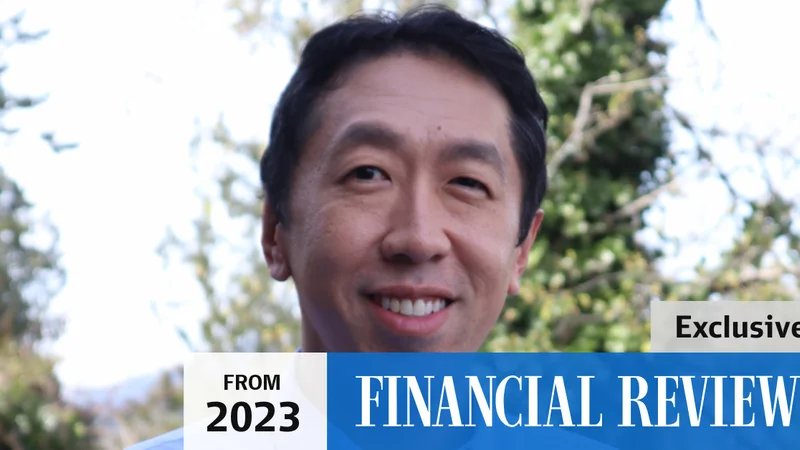
Image: Afr
Main Takeaway
Andrew Ng says AI extinction warnings are science fiction and argues that exaggerated fears could encourage regulation that suppresses open-source competition.
Jump to Key PointsSummary
Ng rejects extinction warnings
Andrew Ng says fears that artificial intelligence will cause human extinction are exaggerated and disconnected from the technology’s present risks. The AI pioneer, who co-founded Google Brain, Coursera and DeepLearning.AI, argues that discussion should focus on concrete harms and useful safeguards rather than speculative catastrophe.
Ng’s position has surfaced repeatedly since 2023 and was renewed in 2026 coverage by Bloomberg and Fox Business. In a public statement summarized by LessWrong, he said he wanted a serious conversation about extinction risk but questioned how current AI systems could produce that outcome. His criticism places him against prominent researchers and executives who have treated advanced AI as a possible civilization-level threat.
A dispute over evidence
The central disagreement concerns the distance between present capabilities and worst-case scenarios. Ng’s argument is that existing systems remain tools built, deployed and constrained by people, while extinction warnings often depend on chains of future assumptions about autonomy, capability growth and loss of control.
That position does not dismiss every AI danger. The reporting describes Ng as accepting meaningful risks, including misuse and other social harms, while rejecting the claim that extinction is a serious consequence of current systems. EqualAI’s account of Ng’s AI-literacy work also frames his broader approach around public understanding and practical governance, rather than fear-driven narratives.
Regulation enters the argument
Ng says catastrophic rhetoric can shape policy in ways that harm competition. In comments reported by the Australian Financial Review, he argued that large technology companies may promote extinction fears alongside licensing proposals that would impose heavy compliance burdens on AI developers, including open-source projects.
The concern is economic as much as technical. Licensing systems designed around frontier-model risks could favor companies with the money and legal staff to satisfy complex rules, while smaller firms, researchers and open-source developers face higher barriers. Ng’s 2023 Senate statement similarly described AI as a general-purpose technology with broad beneficial uses and said fears of catastrophe were being overstated.
Open source becomes the fault line
Open-source AI sits at the center of Ng’s policy concerns because access spreads development beyond a small group of model makers. Supporters see open systems as a route to lower costs, wider research and more competition. Critics focus on the ease with which openly available models can be adapted for fraud, cyberattacks or other abuse.
Ng’s argument is that broad restrictions could lock in the power of the largest companies without addressing the specific sources of harm. That view gives the debate a clear commercial dimension: rules framed as safety measures can also determine which organizations are allowed to build, modify and distribute advanced models. OpenAI and other major developers therefore face pressure from both directions, to demonstrate safety while avoiding rules that leave the field to incumbents.
The stakes for AI policy
Ng’s comments sharpen a policy choice between precaution aimed at extreme scenarios and controls tied to measurable risks. A practical framework would address privacy, fraud, dangerous automation, model security and accountability while leaving room for research and new entrants.
The debate remains unresolved because the two camps assign different weight to uncertain future capabilities. Extinction-risk advocates want governments to prepare before systems become harder to control. Ng argues that policy built around science-fiction scenarios can distract from harms already visible and produce rules that reduce the benefits of AI. His Senate participation shows that the argument has moved beyond social media into formal discussions with lawmakers.
What happens next
The argument will continue as model capabilities, deployment patterns and government proposals develop. Ng’s intervention gives industry critics a prominent voice against broad licensing mandates, while safety advocates will keep pressing for safeguards before systems become more autonomous.
For developers and policymakers, the immediate question is how to distinguish concrete dangers from speculative end states. The answer will shape access to computing, model weights, open-source releases and liability rules. Ng’s position is clear: AI deserves oversight, but extinction claims should not become the organizing principle for the entire regulatory system.
Key Points
Andrew Ng rejects AI extinction warnings as science fiction and urges regulation focused on measurable harms.
Ng argues catastrophic rhetoric could produce licensing rules that suppress open-source developers and smaller competitors.
The policy debate contrasts precaution about future loss of control with safeguards targeting present AI misuse.
Ng accepts AI creates serious risks but rejects extinction as a meaningful consequence of current systems.
Heavy compliance burdens could strengthen large technology companies while narrowing access to advanced AI development.
Questions Answered
Andrew Ng says AI extinction fears are science fiction or vastly exaggerated. He accepts that AI creates real risks, but argues current systems do not justify organizing policy around human extinction scenarios.
Andrew Ng argues heavy licensing requirements could suppress open-source AI and smaller developers. He says large companies would be better positioned to absorb complex compliance costs, which could reduce competition.
Andrew Ng believes AI has meaningful risks, including misuse and social harm. His disagreement concerns the scale and evidence behind claims that AI will cause human extinction.
Andrew Ng says extinction fears could encourage rules that make advanced AI development accessible mainly to large companies. Such rules could raise barriers for researchers, startups and open-source communities.
Andrew Ng supports practical safeguards aimed at concrete harms such as misuse, privacy violations, fraud and dangerous automation. He opposes using speculative extinction scenarios as the main basis for broad licensing mandates.
Source Reliability
29% of sources are highly trusted · Avg reliability: 65
Go deeper with Organic Intel
Simple AI systems for your life, work, and business. Each one includes copyable prompts, guides, and downloadable resources.
Explore Systems