Amazon Adds AI Verification Tool to Help Customers Detect Impersonation Scams
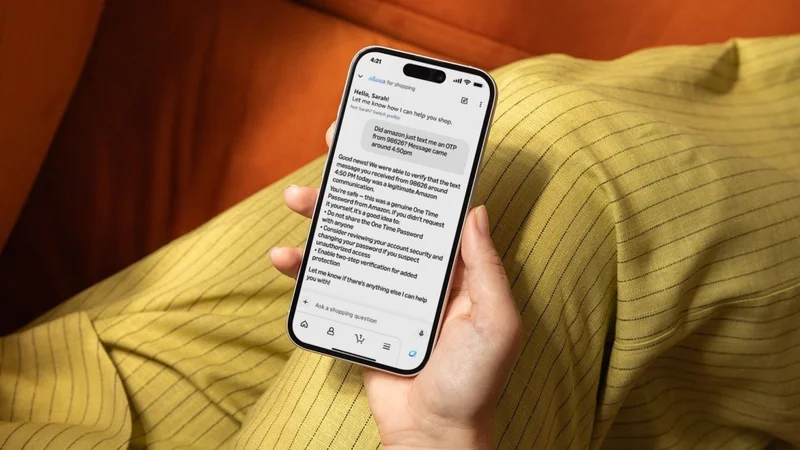
Image: The Verge AI
Main Takeaway
Amazon’s Alexa for Shopping can now assess suspicious emails, texts, and calls by comparing them with billions of authentic company communications.
Jump to Key PointsSummary
Amazon adds message verification
Amazon has added a scam-checking feature to Alexa for Shopping, allowing customers to ask whether an email, text message, or phone call genuinely came from the retailer. The assistant evaluates the communication against Amazon’s records and examines details such as the sender, wording, formatting, timing, and message metadata.
The feature addresses a recurring customer-service problem. About 360,000 people contact Amazon each year to ask whether a message is authentic, according to the company. Alexa for Shopping is designed to provide a faster answer by checking suspicious communications against billions of messages Amazon has sent worldwide.
How the AI checks authenticity
Alexa for Shopping uses several signals rather than relying only on the visible sender address. Amazon says the system compares a suspicious message with records of company communications, then reviews its contents, formatting, origin information, timing, and other metadata. Customers can submit or describe a message and ask the assistant to assess it.
Amazon has set a high bar for confirmation: Alexa will identify a message as genuine only when the system is completely certain. That restriction matters because a confident answer about a fraudulent order notice, one-time passcode, or payment request could expose customers to account theft. The system also improves when customers report suspicious communications, giving Amazon more examples of impersonation attempts to evaluate.
Existing safeguards still matter
Amazon’s established customer guidance remains a primary defense against phishing. Customers can check Message Center to see whether an email was sent through Amazon’s systems, review Your Orders for unfamiliar purchases, and report suspicious messages. Amazon also advises examining sender addresses for misspellings, substituted characters, or domains that imitate amazon.com.
The AI tool adds a conversational route to those checks, but it doesn't replace them. Phishing messages can imitate branding and writing styles, while calls and texts don't always offer the same visible evidence as email. Amazon’s customer-service guidance therefore continues to direct users toward account records and official reporting channels.
A broader anti-phishing operation
The new assistant feature sits alongside Amazon’s wider effort to remove impersonation infrastructure. Amazon introduced SENTRIX in February as an AI system for finding and taking down malicious websites, with monitoring and risk-assessment components aimed at suspicious URLs. The company said SENTRIX analyzes more than 50,000 suspicious URLs each week and helped increase successful phishing-URL takedowns by more than 10% in 2025.
That work targets the websites behind scams, while Alexa for Shopping addresses the moment a customer receives a suspicious communication. AWS has also published a separate approach using Amazon Comprehend to classify phishing emails with machine-learning models, showing how Amazon applies automated detection across both consumer protection and cloud security services.
Limits and customer impact
The feature gives customers a practical way to investigate suspicious messages without manually interpreting every technical clue. Its strongest use cases include fake delivery notices, payment requests, account warnings, and one-time passcode messages that imitate familiar Amazon workflows.
Accuracy and privacy remain central to adoption. Amazon’s decision to confirm authenticity only at a high confidence threshold limits false reassurance, while the company’s stated use of message records and metadata raises questions about how submitted communications are handled. Customers still need to avoid clicking links, sharing passwords or codes, and responding to urgent payment demands before verification.
What happens next
Amazon’s next test is whether customers use Alexa for Shopping before acting on suspicious communications. The company’s annual volume of scam-related inquiries indicates substantial demand for a simpler verification process, while reported examples can help refine detection over time.
The rollout also adds another layer to Amazon’s anti-fraud strategy, connecting customer reports, internal message records, malicious-URL takedowns, and machine-learning classification. For users, the safest path remains layered: ask Alexa for Shopping, check Message Center and order history, inspect the sender, and report anything suspicious through Amazon’s official channels.
Key Points
Amazon added Alexa for Shopping verification for suspicious emails, texts, and phone calls.
Alexa compares communications with billions of Amazon messages and analyzes sender, content, timing, and metadata.
Amazon says 360,000 customers annually ask whether messages claiming to be from Amazon are legitimate.
Message Center, order history, sender inspection, and scam reporting remain essential customer safeguards.
Amazon’s SENTRIX system scans more than 50,000 suspicious URLs weekly for phishing infrastructure.
Questions Answered
Amazon Alexa for Shopping compares suspicious communications with records of authentic Amazon messages and analyzes sender details, content, formatting, timing, and metadata. Customers can ask the assistant to assess emails, texts, and phone calls.
Amazon Alexa for Shopping confirms a message as genuine only when its system is completely certain. That threshold is intended to reduce false reassurance when scammers imitate Amazon branding or communication styles.
Amazon customers should check Message Center, review Your Orders, inspect the sender address, avoid links and payment requests, and report the communication through Amazon’s official channels. Alexa for Shopping provides an additional verification step.
Amazon says about 360,000 customers contact its customer service each year to ask whether a message claiming to be from Amazon is legitimate. Alexa for Shopping is intended to answer many of those questions more quickly.
Amazon SENTRIX is an AI system that identifies and helps remove malicious websites used in impersonation scams. Amazon says it analyzes more than 50,000 suspicious URLs each week and contributed to a more than 10% increase in successful phishing-URL takedowns in 2025.
Source Reliability
67% of sources are highly trusted · Avg reliability: 81
 Aboutamazon
 Aws.amazon
 Trustworthyshopping.aboutamazon
Go deeper with Organic Intel
Simple AI systems for your life, work, and business. Each one includes copyable prompts, guides, and downloadable resources.
Explore Systems